Burners & Combustion: Emission Control, Environmental Compliance & Operating Cost Reduction for Singapore Plant Managers
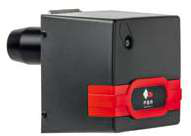
Table of Contentsexpand_more
Understanding Burners & Combustion in Singapore's Regulatory Environment
Burners & combustion systems are the operational heart of industrial heating, but in Singapore, they're also subject to increasingly stringent environmental standards. The National Environment Agency (NEA) enforces strict limits on NOx, particulate matter, and greenhouse gas emissions—regulations that directly impact your operating license and fuel budget.
Over 35 years of equipment distribution experience, 3G Electric has worked with hundreds of Singapore plant managers to navigate this intersection between performance and compliance. The challenge isn't simply buying a burner; it's selecting equipment that meets today's emission limits while maintaining the thermal output and reliability your production demands.
Modern combustion technology offers a pathway forward. Two-stage burners, progressive fuel injection, and advanced flame detection systems can reduce NOx emissions by 30–50% compared to conventional single-stage units—often while improving fuel economy by 5–12%. For plant managers operating under tight environmental and budget pressures, this isn't a luxury upgrade; it's essential operational strategy.
Section 1: Meeting Singapore's Emission Standards with Advanced Burner Technology
Understanding Your Emission Obligations
Singapore's NEA emission limits typically require:
- NOx emissions: Below 120–150 mg/kWh for light-oil burners (varies by boiler size and fuel type)
- Particulate matter: Less than 50 mg/Nm³ for oil-fired systems
- CO and smoke: Near-complete combustion to prevent opacity and unburned fuel escape
Non-compliance can result in fines, operational shutdowns, or license suspension—costs that dwarf the investment in modern burner technology.
Two-Stage Combustion as Your Compliance Strategy
Two-stage progressive burners deliver lower emissions through controlled fuel-air mixing:
Stage 1 (Low Fire): Operates at 30–40% load with lean combustion ratios, cooling flame temperature and reducing NOx formation.
Stage 2 (High Fire): Switches to higher load with optimized air supply for complete fuel oxidation and maximum thermal output.
The FBR FGP 130/M TC EVO SA exemplifies this approach. With a maximum thermal output of 1,326 Mcal/h and progressive two-stage combustion, it delivers the heat your process needs while maintaining emission compliance. This burner is designed specifically for facilities that must balance production demands with environmental responsibility.
For facilities with lower thermal requirements or space constraints, the FBR X G OSR 2003 TC R S offers single-stage light-oil combustion with NOx emissions below 120 mg/kWh—meeting even the strictest NEA limits. Operating at 14.2–36.7 kW with compact footprint and low noise (under 87 dBA), it's ideal for retrofit applications in urban industrial zones.
Heavy Oil Burners: Advanced Emission Control for High-Output Facilities
Facilities burning heavy fuel oil face steeper compliance challenges. Higher sulfur content and denser fuel create conditions favorable for particulate formation and NOx production.
The FBR KN 550/M TL EL addresses this with dual-fuel capability (oil or gas switching) and modulating two-stage combustion delivering 698–6,395 kW. By allowing operators to switch to natural gas during peak emission-sensitive periods (morning hours, for example), plant managers gain operational flexibility while reducing cumulative emissions. The IP40 protection and 87–91 dBA operation make it suitable for industrial environments where equipment durability and noise control matter.
Section 2: Fuel Economy Optimization Through Combustion Tuning and Control
The Cost-Compliance Connection
Emission reduction and fuel economy are not competing goals—they're aligned. More efficient combustion means:
- Lower fuel waste (less unburned hydrocarbons and CO)
- Reduced excess air (less energy lost to heating unnecessary air)
- Better heat transfer to your process
A poorly tuned burner operating at 75% efficiency wastes 25% of fuel energy. In Singapore's high-cost energy environment, a 1,000 kW burner running 6,000 hours annually at 75% efficiency costs approximately SGD 180,000 more per year than the same burner at 85% efficiency.
Practical Tuning Methodology
Step 1: Establish Your Baseline
- Measure stack temperature (should be 150–200°C above inlet air for oil burners)
- Test flue gas oxygen content (optimal: 3–5% O₂ for oil, 2–4% for gas)
- Monitor fuel consumption and thermal output
- Document flame color and ignition time
- Excess oxygen above 5% indicates excessive air supply—reduce air register opening
- Below 2% oxygen risks incomplete combustion and CO emissions—increase air supply
- Use a combustion analyzer (portable units cost SGD 2,000–5,000) for monthly verification
- Two-stage burners like the FBR KN 550/M TL EL reduce to low-fire when demand drops
- Continuous modulation (where available) cuts fuel consumption during partial-load operation by 15–25%
- Program your control system to match burner output to actual process demand, not maximum capacity
Real-World Savings Example
A Singapore food processing facility operating a 2,000 kW oil burner 5,500 hours annually implemented:
- Stack temperature reduction from 240°C to 175°C (improved heat recovery)
- Air-fuel ratio optimization reducing excess oxygen from 7% to 4%
- Quarterly combustion analyzer verification
Section 3: Maintenance and Monitoring Systems That Prevent Costly Downtime
Critical Maintenance Tasks for Emission Compliance
Emission control components degrade with use. Neglected maintenance doesn't just increase emissions—it increases fuel consumption and risks unplanned shutdowns.
Monthly Tasks:
- Visual inspection of burner flame (color, stability, ignition delay)
- Check fuel pressure gauges and adjust if drift exceeds ±10%
- Inspect combustion air intake for blockages or corrosion
- Clean or replace combustion air filter if differential pressure exceeds 50 mmWC
- Flue gas analysis (oxygen, CO, and temperature)
- Nozzle inspection and cleaning (oil burners accumulate carbon deposits)
- Electrical continuity check on flame detection sensors
- Review fuel consumption logs against baseline for unexpected increases
- Full burner disassembly, inspection, and seal replacement
- Combustion chamber and heat exchanger cleaning
- Air valve and fuel valve full functional test
- Update emission documentation for NEA records
Predictive Indicators of Declining Performance
These warning signs typically precede catastrophic failure by weeks:
- Increasing ignition delay (normally 2–3 seconds; if exceeding 5 seconds, fuel injection pressure is dropping)
- Flame instability (flickering or color change suggests air supply obstruction or fuel contamination)
- Rising stack temperature (more than 220°C for oil burners indicates heat transfer fouling or incomplete combustion)
- Fuel consumption creeping upward (5–10% unexplained increase suggests nozzle wear or excess air)
- Higher electrical power consumption by fuel pump or forced draft fan (indicates mechanical friction or blocked passages)
Addressing any of these within 2–4 weeks typically costs SGD 800–2,000 in parts and labor. Ignoring them leads to emergency repairs costing SGD 8,000–15,000 plus unplanned downtime.
Section 4: Procurement and Implementation Strategy for Singapore Plant Managers
Selecting the Right Burner for Your Facility
Three variables determine optimal burner selection:
1. Thermal Output Required: Match burner capacity to peak process demand, not maximum boiler capacity. Oversized burners operate at partial load (lower efficiency, higher emissions).
2. Fuel Type Available: Natural gas offers lowest emissions but requires pipeline connection. Light oil (diesel) provides flexibility without infrastructure. Heavy oil requires advanced controls but may suit existing tank infrastructure.
3. Regulatory Compliance Window: If your facility has 12 months until tighter NEA limits, modern two-stage burners are essential. If you have 3+ years, single-stage burners may still be compliant.
Implementation Timeline
Month 1–2: Assessment
- Commission combustion analysis of existing system
- Document current NOx, particulate, and CO emissions
- Calculate fuel consumption baseline and operating costs
- Review NEA compliance records and upcoming deadline adjustments
- Specify new burner technology (two-stage vs. modulating, fuel type)
- Request performance guarantees from suppliers (emission levels, efficiency, spare parts availability)
- Ensure supplier provides commissioning and tuning support
- 3G Electric provides comprehensive technical data sheets and performance curves for all listed equipment
- Schedule installation during maintenance window or lower production period
- Factory-trained technician should oversee commissioning (do not rely solely on installer notes)
- Perform full combustion analysis immediately after installation
- Document baseline performance for future monitoring
- Implement monthly visual inspections
- Conduct quarterly combustion analysis
- Track fuel consumption against baseline
- Adjust control settings based on monitoring data
Cost-Benefit Framework
For a typical Singapore manufacturing facility:
| Item | Cost (SGD) |
|------|------------|
| Modern two-stage burner (2,000 kW) | 18,000–24,000 |
| Control system integration | 5,000–8,000 |
| Installation and commissioning | 3,000–5,000 |
| Total Capital Investment | 26,000–37,000 |
| Annual fuel savings (8–12% consumption reduction) | 18,000–28,000 |
| Annual maintenance cost reduction | 2,000–4,000 |
| Total Annual Benefit | 20,000–32,000 |
| Payback Period | 13–22 months |
| 5-Year Net Benefit | 74,000–124,000 |
This analysis excludes avoided penalties for emission non-compliance, which can exceed SGD 50,000 for first violations.
Why 3G Electric Supports This Strategy
With over 35 years of industrial equipment distribution, 3G Electric maintains in-stock inventory of compliant burner systems for Singapore operations. We provide:
- Technical specifications and emission data for every burner model
- Commissioning support through qualified technicians
- Spare parts logistics ensuring 48-hour delivery for critical components
- Performance documentation required for NEA compliance records
Our distributor relationships with manufacturers like FBR ensure you access the latest combustion technology at competitive pricing, with warranty protection and local support.
Key Takeaways for Plant Managers
1. Emission compliance is no longer optional—Singapore's NEA regulations will only tighten. Modern two-stage and modulating burners are the practical path to meeting standards while maintaining production.
2. Fuel economy and environmental performance align—optimized combustion reduces both emissions and costs. The investment in modern burner technology typically pays for itself within 18–24 months.
3. Monthly monitoring prevents both unplanned downtime and regulatory violations—simple combustion analysis (quarterly) and visual inspection (monthly) cost less than a single emergency repair.
4. Procurement should emphasize supplier support—commissioning quality and long-term spare parts availability matter as much as burner price. 3G Electric's 35+ year track record and technical partnership approach ensure your investment continues delivering value for a decade or more.
5. Dual-fuel flexibility provides operational resilience—facilities with gas-capable burners gain the ability to switch fuels during peak emission-sensitive periods, reducing regulatory risk while optimizing operating cost.
![Gas Burner Types SG | Selection Guide [2026]](https://oxalncjenpflyqfncuhe.supabase.co/storage/v1/object/public/product-assets/products/907afddd-f10f-4f84-8526-06f1efc8daa0/002449_41.png)