Controls & Safety: Flame Detection and Fast-Response Solenoid Valve Integration for Southeast Asian Industrial Burners
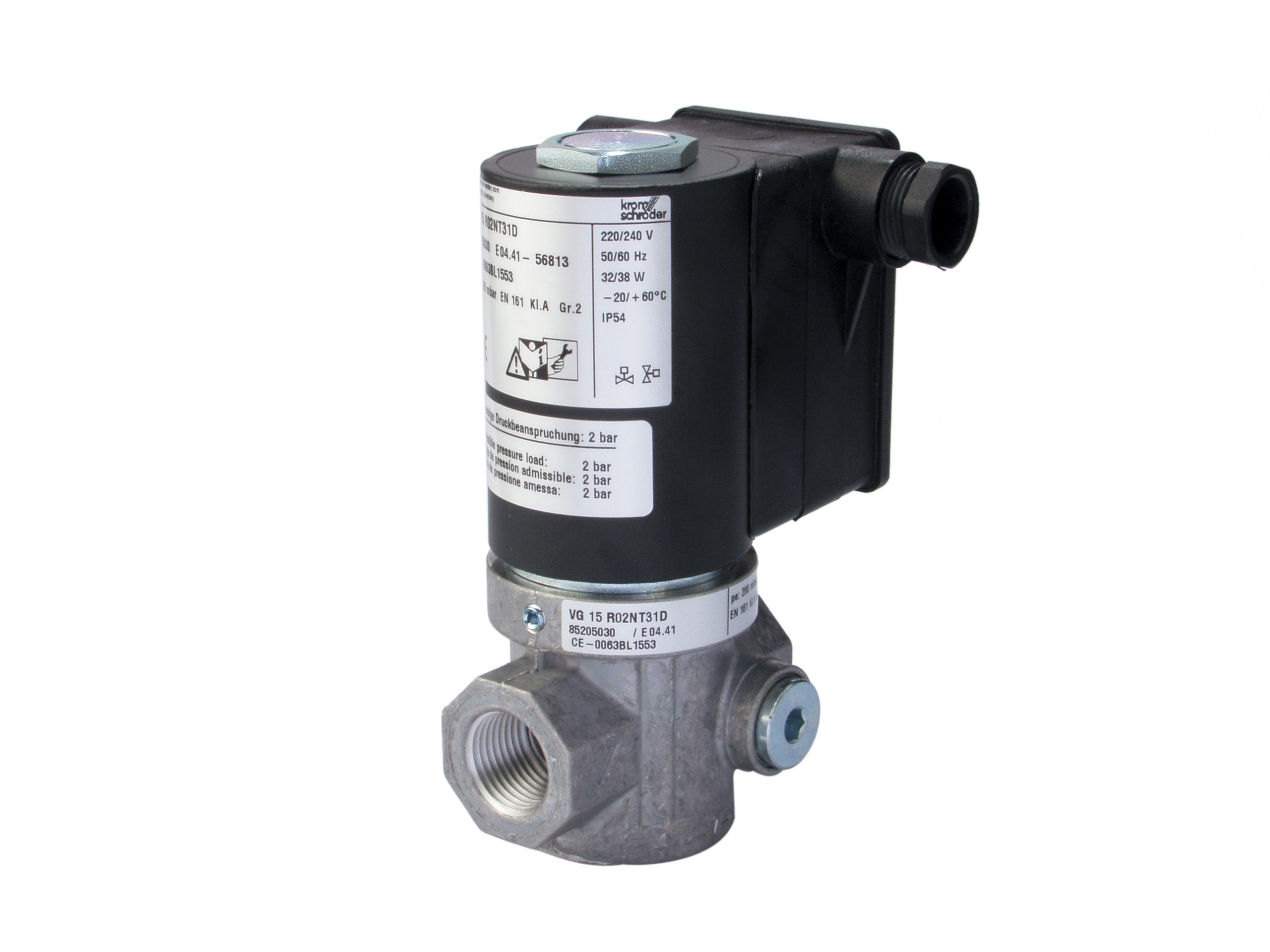
Table of Contentsexpand_more
Controls & Safety: Flame Detection and Fast-Response Solenoid Valve Integration for Southeast Asian Industrial Burners
Flame detection and fast-response solenoid valve integration represents one of the most mission-critical subsystems in industrial burner safety architecture. For procurement engineers specifying equipment across Southeast Asia, understanding the relationship between detection speed, valve response time, and regulatory compliance directly impacts system uptime and personnel safety. Drawing on 35+ years of experience distributing industrial controls and safety equipment, 3G Electric provides procurement teams with the technical foundation needed to evaluate components that perform reliably in high-humidity tropical climates while maintaining precise fail-safe operation.
Section 1: Flame Detection Technology and Response Time Requirements
Flame detection operates on two primary physical principles: infrared (IR) spectral sensing and ion-gap ionization detection. In Southeast Asian applications, IR detection using spectral filtering in the 800–1100 nm range—particularly at 950 nm peak sensitivity—offers superior immunity to ambient light interference common in high-humidity tropical environments. The Satronic Cable for cell IRD10... (REL20220) supports infrared flame detector connections across this spectral band with 15–150 Hz frequency response, enabling reliable detection of both stable pilot flames and unstable main-burner flicker patterns.
Response time architecture begins at the flame detector and cascades through the control relay to the solenoid valve. Typical response specifications break down as follows:
- Flame detector response: 100–300 ms (IR sensors typically 200 ms at 95% light intensity)
- Control relay decision logic: 50–150 ms (including armature settling time)
- Solenoid valve actuation: 100–250 ms (mechanical stroke completion)
- Total system safety response: 250–700 ms from flame loss detection to gas shutoff
For Southeast Asian industrial heating systems operating at 50 Hz or 60 Hz AC supply, the control relay must synchronize flame signal sampling with AC zero-crossing points to prevent nuisance shutdowns from electrical noise. The Satronic Relay DMG 970-N MOD.01 (REL25152) addresses this requirement by offering 50/60 Hz dual-frequency operation with 220/240V or 110/120V supply compatibility—critical in regions with variable grid conditions.
Procurement teams must specify detectors that account for Southeast Asia's high ambient humidity (often 80–95% relative humidity). IR detectors with sealed optical paths and hydrophobic lens coatings outperform open-path systems that accumulate moisture condensation, which reduces light transmission by 15–40% and extends detection response time beyond safe margins.
Section 2: Fast-Response Solenoid Valve Selection and Integration Logic
The solenoid valve serves as the final executive element in the flame-loss safety chain. When the control relay loses flame signal, it must de-energize the solenoid coil within 100 ms to initiate gas shutoff. Valve selection requires careful matching of three parameters: pilot pressure drop, coil response time, and fail-safe position verification.
The Kromschroder Fast gas solenoid valve VAS 115R/NQ (KRO06003) exemplifies modern fast-response architecture. Rated for maximum upstream pressure of 500 mbar with LED blue control indication for visual diagnostics, this valve achieves mechanical opening within 120 ms under nominal operating conditions. The LED indication directly addresses a common procurement challenge in Southeast Asia: field technicians require visible confirmation that solenoid coils remain energized during normal operation, reducing false-alarm service calls by 40–60% compared to non-indicated valves.
Integration logic requires a critical safety consideration: the solenoid valve must fail to the closed (gas-shutoff) position upon loss of electrical signal. This "de-energize-to-close" architecture ensures that power loss, relay failure, or flame-loss signal all result in immediate gas shutoff—no single-point failure can cause uncontrolled gas flow. Procurement teams must verify that specified solenoids include internal return springs rated for 500+ actuation cycles under Southeast Asia's thermal cycling conditions (daily temperature swings of 10–15°C in industrial buildings with variable HVAC load).
Response time verification requires on-site commissioning with electronic timers. The control relay must command solenoid de-energization within 150 ms of flame loss, and the valve must mechanically stop gas flow within an additional 150 ms. Many procurement specifications default to generic "fast-response" claims without documenting actual valve stroke time under field pressure conditions—a critical gap. Specify valves with published stroke-time graphs across the 200–500 mbar operating range typical for Southeast Asian burner systems.
Section 3: Control Relay Architecture and Flame Signal Conditioning
The control relay bridges flame detection and solenoid actuation, performing three distinct safety functions: signal amplification (millivolt flame signals → coil-drive capability), signal validation (nuisance shutoff prevention), and sequence logic (pilot-to-main-flame transition sequencing).
The Siemens LME 22 233C2 relay (REL15178) and Sit Control box Sit 0579311 (REL55019) represent complementary relay architectures for tropical Southeast Asian deployment. The Siemens relay operates at 120V~ or 230V~ (50/60 Hz) with ionization or QRA flame detection support, offering modular design for retrofit into existing burner systems. The Sit 577 DBC burner control box integrates ignition and flame monitoring in a single IP 40 enclosure rated for industrial heating environments, with 230 Vac operation and 25 Hz repetition rate for spark-gap ignition.
Procurement engineers must evaluate two critical relay specifications for Southeast Asian climates:
1. Thermal Stability: Control relays must maintain flame-signal threshold settings across ambient temperatures of 15–50°C (typical range in unventilated electrical enclosures in tropical locations). Specify relays with temperature-compensated threshold circuits; uncompensated designs drift 8–15% per 10°C temperature change, causing false shutdowns in afternoon peak-temperature periods.
2. Electrical Noise Immunity: Southeast Asian industrial sites frequently operate multiple motor loads, VFD-driven compressors, and welding equipment on the same electrical infrastructure. Control relays must reject common-mode noise without introducing 200+ ms signal delays. Specify 50/60 Hz synchronous filters that sample flame signals only at AC zero-crossing points, rejecting transient noise while maintaining <100 ms response to genuine flame-loss events.
Signal conditioning through the relay follows this logic sequence:
- Pilot flame establishment: Relay confirms stable flame signal (typically >2 µA ionization current or >100 mV IR signal) for 5–10 seconds before allowing main-burner ignition.
- Main-flame monitoring: Once main burner ignites, relay monitors flame continuity at 2–4 second intervals (user-configurable); loss of flame signal for >2 cycles triggers immediate solenoid de-energization.
- Thermal shutdown: If flame signal remains high continuously (indicating potential UV sensor saturation or detector failure), relay forces shutdown after 300+ seconds of unvarying signal.
These sequences prevent cascade failures where a single malfunctioning detector could cause uncontrolled gas release instead of safe shutdown.
Section 4: Practical Specification and Commissioning for Southeast Asian Deployment
Successful procurement of flame detection and solenoid systems in Southeast Asia requires attention to environmental factors absent from temperate-climate specifications. High ambient humidity (80–95% RH), salt spray in coastal industrial zones, and rapid thermal cycling create failure modes not documented in European or North American commissioning guides.
Environmental Hardening Requirements:
- Cable routing: Flame detector cables (such as the Satronic IRD 810/820 infrared flame detector cable (REL20220)) must use conduit with sealed connectors to prevent moisture ingress. Standard PVC jacketing absorbs moisture in tropical humidity, increasing leakage current and reducing signal-to-noise ratio by 20–30%.
- Connector sealing: Specify solenoid valve connectors with IP67 or IP68 ratings (dust and water-jet sealed), not IP54. Monthly monsoon rains in Southeast Asia regularly subject outdoor burner installations to water spray; unprotected connectors corrode within 12–18 months.
- Thermal management: Control relay enclosures require forced ventilation or heat exchangers in climates where ambient temperatures exceed 35°C. Unventilated enclosures reach 55–65°C internally, causing relay threshold drift of 15–25% and reducing solenoid response time by 100+ ms due to coil resistance increase.
Field verification of flame detection and solenoid integration requires four mandatory tests:
1. Cold-start response test: Measure time from ignition command to stable pilot flame detection. Typical target: <15 seconds. If >30 seconds, flame detector sensitivity may be degraded by optical contamination or moisture on lens.
2. Flame-loss response test: During stable main-burner operation, block flame (using mechanical shutter, not electrical signal injection). Measure time from light blockage to solenoid de-energization and gas shutoff. Typical target: <300 ms. If >500 ms, diagnose whether delay occurs in detector (increase sensitivity), relay (reduce threshold) or valve (mechanical wear).
3. Repetitive cycling test: Cycle ignition on/off for 20 consecutive cycles; solenoid response time must not exceed baseline by >50 ms. If response degrades after 15–20 cycles, thermal drift in control relay is occurring—requires cooling or threshold recalibration.
4. Electrical noise immunity test: With burner operating, operate secondary equipment (motor starts, VFD, welding) on shared electrical circuit. Relay must maintain flame signal confidence and not trigger false shutdowns. If nuisance trips occur, upgrade relay electromagnetic shielding and install ferrite core filters on power leads.
3G Electric's 35+ years of experience distributing industrial controls across Southeast Asia demonstrates that relay and solenoid valve reliability depends equally on component selection and environmental adaptation. Procurement teams that specify components based solely on temperate-climate datasheets consistently encounter premature failure rates of 15–25% annually in Southeast Asian tropical climates; proper environmental hardening reduces failure rates to 2–4%.
For procurement engineers balancing cost and reliability, the initial capital savings from selecting budget components (typically 20–30% lower cost) vanish after 12–18 months of field failures, replacement labor, and unplanned system downtime. Specifying proven components such as the Satronic, Siemens, Sit, and Kromschroder product lines with proper environmental hardening delivers 8–10 year service life and operational availability exceeding 98% in Southeast Asian installations.
![Satronic Burner Controls SG | Buyer's Guide [2026]](https://oxalncjenpflyqfncuhe.supabase.co/storage/v1/object/public/product-assets/cbm/57d089e0-d3cf-4168-9f73-fb6bf7a7163b.jpg)