Flow Rate vs. Pressure Trade-offs in Industry Applications: Selecting Optimal Equipment for Singapore Manufacturing Facilities
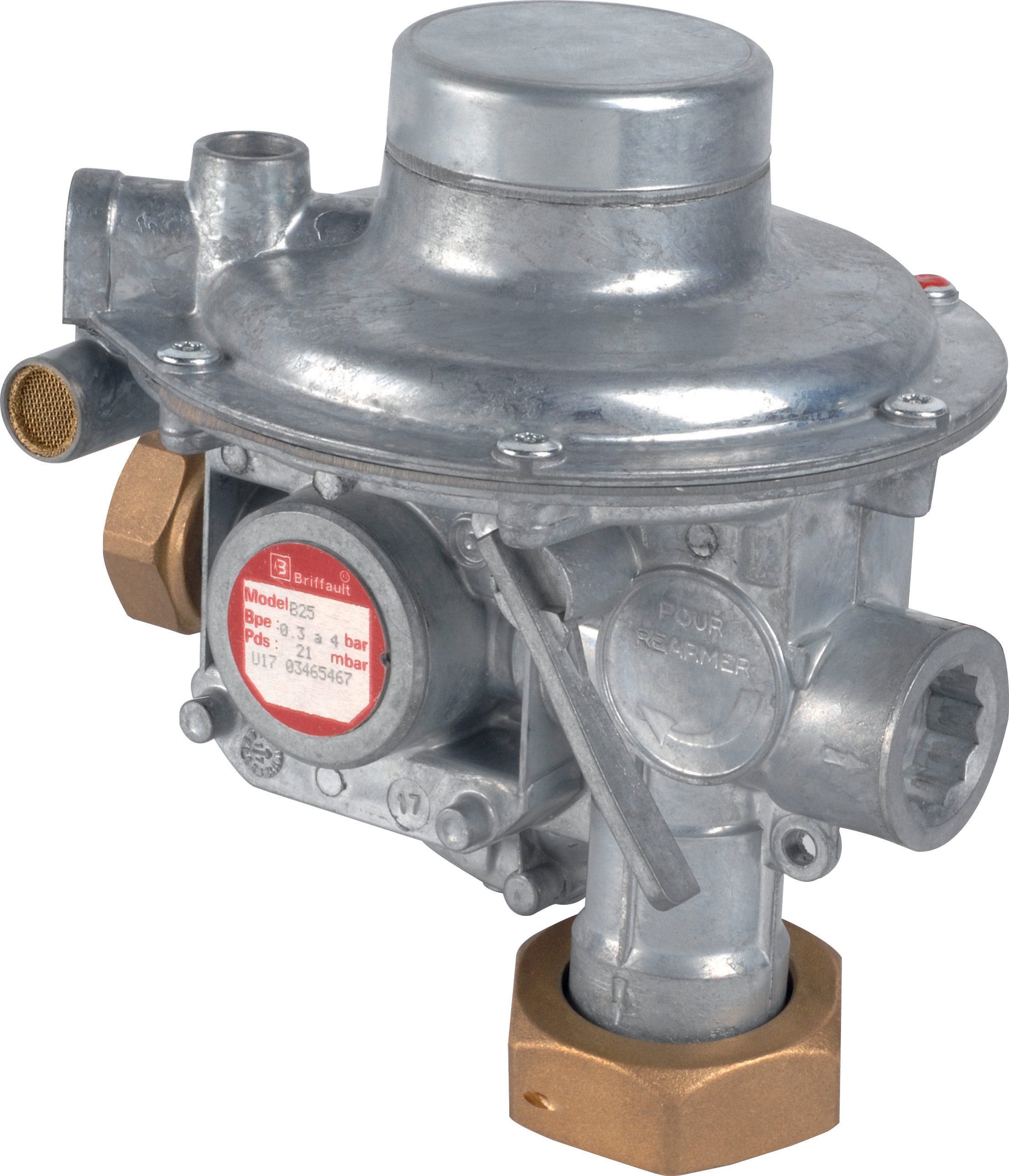
Table of Contentsexpand_more
Understanding Flow Rate and Pressure Fundamentals in Industry Applications
Industry applications across Singapore's manufacturing sector demand equipment specifications that balance operational efficiency against capital investment. The fundamental relationship between flow rate (measured in liters per minute) and system pressure (bar) directly impacts production throughput, energy consumption, and component longevity.
With over 35 years of experience distributing industrial equipment throughout the Asia-Pacific region, 3G Electric understands that procurement engineers face recurring specification dilemmas: selecting a high-flow, lower-pressure system versus a compact, high-pressure unit. This decision influences not only initial equipment cost but also piping infrastructure requirements, cooling system capacity, and maintenance protocols across multi-year operating cycles.
The three primary equipment categories in this comparison—compact gear pumps, mid-range hydraulic units, and industrial-scale displacement pumps—each serve distinct operational niches. Understanding their pressure-flow characteristics enables procurement teams to match specifications precisely to facility demands, avoiding both undersized bottlenecks and unnecessarily oversized investments.
Compact Gear Pumps: High-Pressure Efficiency for Constrained Spaces
The Interpump PUMP E1D1808 L represents the compact segment of industrial pump specifications, delivering 8 L/min at 180 bar pressure while consuming just 2.72 kW of input power. This small footprint (5 kg total weight) prioritizes pressure density over volumetric output—a critical consideration for Singapore facilities with space constraints or modular production configurations.
Procurement engineers evaluating this unit should recognize its optimal application in precision injection systems, small-scale hydraulic presses, and portable equipment requiring high system pressure within minimal physical envelope. The 180 bar operating range handles demanding tasks without requiring dedicated large-scale piping infrastructure. Energy efficiency metrics prove particularly advantageous in facilities operating under tropical thermal loads, where excess heat generation necessitates additional cooling capacity.
Key specification advantages for constrained applications:
- Compact 5 kg package fits retrofit scenarios and mobile equipment
- 180 bar pressure accommodates precision tasks (micro-stamping, precision assembly)
- 2.72 kW input reduces facility electrical demand
- 2800 rpm operating speed supports direct motor coupling without gearbox complexity
- 8 L/min volume limits throughput in high-cycle continuous operations
- Unsuitable for cooling-intensive processes requiring sustained high flow
- Gear pump design generates heat at elevated pressures; monitor ambient facility temperatures
Mid-Range Displacement Pumps: Balanced Performance for Versatile Manufacturing
The Pratissoli KF30 industrial pump operates in the middle performance tier, delivering 106 L/min at 200 bar with 40 kW power consumption. This equipment category dominates Singapore manufacturing facilities operating general-purpose hydraulic systems, production line automation, and medium-scale material handling operations.
Unlike the compact gear pump, the KF30's higher displacement (13.25x multiplier versus the E1D1808's single-stage design) enables sustained production cycles with meaningful volumetric output. The 72 kg weight remains manageable for fixed installations, and 200 bar pressure accommodates most industrial applications without requiring specialist high-pressure piping materials.
For procurement engineers evaluating facility-wide system upgrades, the KF30 represents an optimal balance point. The unit's Italian engineering lineage (Pratissoli, part of Interpump Group) reflects decades of European manufacturing discipline applied to tropical operating conditions. This specification suits Singapore's semiconductor equipment suppliers, automotive component manufacturers, and food processing operations requiring reliable multi-shift duty cycles.
Specification advantages for mid-scale operations:
- 106 L/min flow supports 4-8 work stations on common manifold
- 200 bar pressure covers 85-90% of standard industrial applications
- 40 kW power draw aligns with typical facility electrical infrastructure
- Proven reliability across 15+ year operational lifespans in similar climates
- Tropical ambient temperatures (28-32°C) require cooling system capacity planning
- Monthly humidity cycling demands corrosion protection on external components
- Preventive maintenance intervals tighten compared to temperate-zone operations
High-Displacement Systems: Maximum Throughput for Intensive Production
The Pratissoli MW40 industrial pump defines the high-capacity segment, generating 211 L/min at 210 bar pressure with 85 kW input power. This equipment category serves high-volume production environments: automotive welding lines, large-format extrusion systems, and industrial cleaning operations requiring sustained volumetric output.
The MW40's flow rate approaches 2.6x that of the KF30 while maintaining comparable pressure capability. This displacement advantage proves critical in applications where cycle time reduction directly impacts facility throughput metrics. Procurement engineers evaluating productivity improvements often discover that upgrading from mid-range to high-displacement pumps reduces process cycle times by 8-15%, offsetting higher acquisition costs within 18-24 month payback windows.
The 264 kg weight and 85 kW power consumption demand careful facility planning: adequate structural foundation reinforcement, dedicated electrical service sizing, and cooling system capacity. However, for Singapore facilities operating around-the-clock production schedules, the MW40's throughput advantage justifies infrastructure investment. The unit's Pratissoli pedigree ensures international spare parts availability and established service networks throughout Southeast Asia.
Technical advantages for high-volume operations:
- 211 L/min enables 10-12 simultaneous work stations or high-cycle single applications
- 210 bar maintains pressure capability comparable to mid-range units despite higher displacement
- Pressure regulation complexity remains manageable (unlike variable displacement systems)
- Proven thermal stability during 16-hour continuous operation cycles
- Facility electrical capacity: minimum 120 kW three-phase service
- Cooling system: 25-30 kW heat rejection capacity for continuous duty
- Foundation load: 400+ kg mounted weight plus dynamic forces
- Piping: larger diameter (25-32mm) reduces friction losses
Pressure Regulation Integration Across Equipment Classes
The Francel B25/37mb pressure regulator completes the system analysis by addressing outlet pressure control—a specification often overlooked during pump selection but critical for equipment protection and precision operations. This regulator maintains 37 mbar outlet pressure with integrated safety relief, serving laboratory systems, sensitive manufacturing processes, and pilot control circuits.
Procurement engineers must recognize that pump selection defines system capability, while pressure regulation ensures application precision. The Francel unit's 10 mm vent size supports controlled pressure reduction across all three pump categories, protecting downstream components from transient pressure spikes during load cycling.
Integrating appropriate regulation with pump selection prevents cascade failures: undersized regulators cannot handle peak flow conditions; oversized units introduce control stability issues. For Singapore facilities operating multiple pressure zones (primary 200 bar system with 37 mbar pilot circuits), selecting compatible regulation ensures synchronized system operation.
Spray Application Integration: Completing Industry Applications Workflow
The Euspray flat jet nozzle (1/4" M BSPT, 25° angle) represents the delivery endpoint in complete industry applications systems. Procurement engineers designing surface treatment, cleaning, or coating lines must specify nozzles matched to pump flow rates and system pressures.
The Euspray nozzle's 25° spray angle suits industrial cleaning applications where the KF30 or MW40 pumps deliver sustained flow. However, selecting an undersized nozzle for high-displacement pump systems creates backpressure that stresses seals and generates excess heat; conversely, oversized nozzles waste energy and reduce spray pattern precision.
For Singapore's precision manufacturing sectors, nozzle selection directly impacts surface quality metrics. Matching the Euspray unit's index 30 design with appropriate pump displacement ensures consistent spray pattern repeatability across production batches.
Practical Selection Framework for Singapore Procurement Teams
Establishing equipment selection criteria requires quantifying facility requirements across three dimensions:
Volumetric demand: Calculate total continuous flow requirement (liters/minute) by summing all simultaneous work station demands. The compact E1D1808 suits single-tool applications (≤8 L/min); KF30 serves multi-tool stations (50-120 L/min aggregate); MW40 handles high-volume production (180+ L/min continuous).
Pressure specification: Identify maximum required system pressure across all process steps. Most industrial applications operate 150-210 bar; specialist processes (precision machining, high-performance sealing) may demand 280+ bar. All three pump categories in this comparison serve standard 180-210 bar range effectively.
Thermal management: Singapore's ambient temperatures and humidity demand rigorous cooling capacity planning. Calculate heat generation (kW input minus useful work output, typically 15-25% efficiency loss) and confirm facility cooling capacity accommodates continuous operation. High-displacement MW40 systems generate 20-25 kW waste heat during continuous duty—requiring dedicated coolant circulation.
Infrastructure readiness: Assess electrical service capacity, foundation structural rating, piping diameter specifications, and maintenance team technical depth before finalizing equipment selection. 3G Electric's 35+ year equipment distribution experience throughout Southeast Asia emphasizes that infrastructure readiness often determines success more than raw equipment specifications.
Procurement engineers in Singapore can leverage this framework to move beyond manufacturer datasheets and evaluate equipment within actual facility constraints. The trade-off between flow rate and pressure resolves not through abstract optimization but through matching specific operational requirements to equipment capability ranges.