IFM Capacitive Cylindrical Proximity Sensors | SG Guide
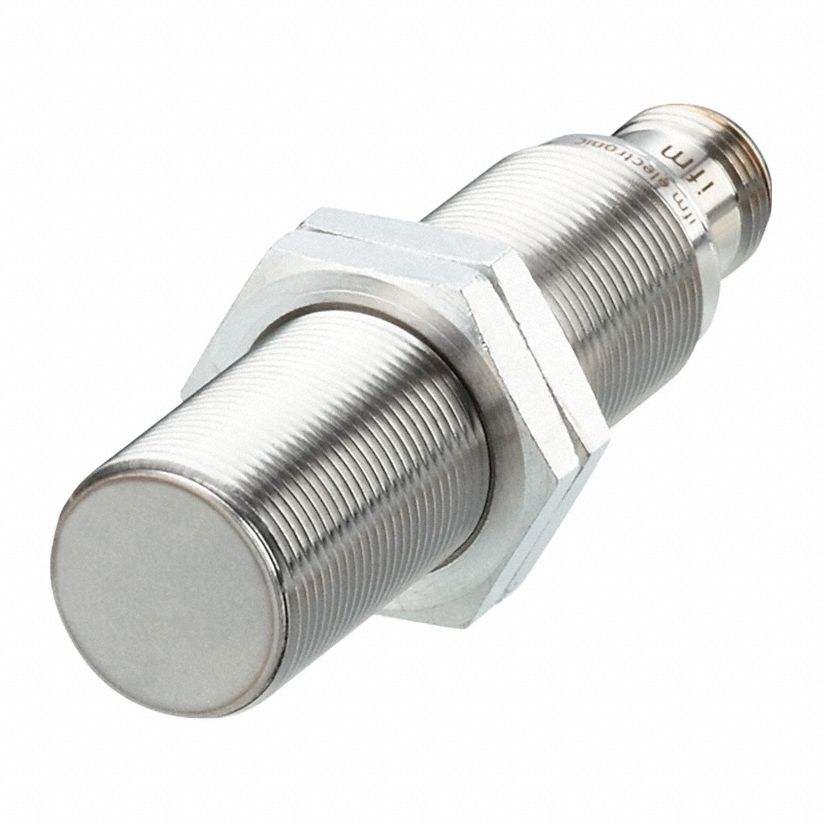
Table of Contentsexpand_more
An IFM capacitive cylindrical proximity sensor is the solution when you need to detect non-metallic materials—liquids, plastics, powders—in industrial automation. Unlike inductive sensors that only see metal, capacitive types sense changes in the dielectric field, making them essential for level monitoring and material presence detection in Singapore's food & beverage, pharmaceutical, and precision manufacturing sectors.
What is an IFM capacitive cylindrical proximity sensor?
A capacitive cylindrical proximity sensor is a non-contact detection device that generates an electrostatic field to sense both conductive and non-conductive materials. When a target—liquid, plastic, powder, or metal—enters the sensing zone, the capacitance changes and triggers the output. IFM's cylindrical capacitive sensors are housed in robust, threaded barrels (typically 30 mm diameter) for easy mounting and are available with built-in connectors or cable terminations.
How does a capacitive cylindrical proximity sensor work?
The sensor's active face emits a high-frequency electrostatic field. A target entering this field alters the dielectric constant, increasing capacitance and causing the oscillator to trigger the output stage. This principle allows detection of materials that inductive sensors cannot see, such as water, oil, plastic pellets, and cardboard. The sensing range is adjustable on many models via a potentiometer, letting you tune sensitivity for the specific material and application.
IFM capacitive vs. inductive cylindrical sensors: which do you need?
Choose a capacitive sensor when your target is non-metallic—liquids in tanks, plastic granules in hoppers, or powder in packaging lines. Choose an inductive sensor when you only need to detect metal objects like machine parts, end stops, or metal cans. IFM offers both families in cylindrical housings; the IFM Capacitive Cylindrical Proximity Sensor (30 mm, 20-250 VAC/DC) handles non-metallic targets, while models like the IFM Shielded Inductive Cylindrical Sensor (M12, PNP) are for metal-only detection.
Key specifications for IFM capacitive cylindrical sensors
| Specification | Typical Value (IFM) |
|---|---|
| Housing diameter | 30 mm |
| Supply voltage | 20-250 VAC / 20-250 VDC |
| Output configuration | 3-wire, built-in connector (3-pin 1/2 in) |
| Detection target | Metallic & non-metallic (liquids, plastics, powders) |
| Typical applications | Level monitoring, material presence, packaging |
Selection criteria: how to choose the right sensor
- Target material: Confirm the sensor must detect non-metallic materials—if yes, capacitive is mandatory; if metal-only, inductive is more cost-effective.
- Supply voltage: Match the sensor to your plant power. IFM capacitive models accept 20-250 VAC/DC, covering both 230 V / 50 Hz single-phase and 24 VDC control circuits common in Singapore.
- Output and wiring: Choose between built-in connectors (faster installation, IP-rated) or non-terminated cables (flexible routing). Verify NPN vs. PNP for DC systems.
- Environmental rating: Singapore's humid, tropical climate demands sensors with high IP ratings and corrosion-resistant housings for washdown areas in F&B and pharma plants.
- Mounting style: Shielded (flush) sensors mount level with metal surfaces; unshielded (non-flush) sensors require space around the active face but offer longer sensing ranges.
Product comparison: IFM cylindrical sensor options
| Model | Type | Supply Voltage | Output | Connection | Best For |
|---|---|---|---|---|---|
| IFM Capacitive Cylindrical Sensor | Capacitive, 30 mm | 20-250 VAC/DC | 3-wire | 3-pin 1/2 in connector | Non-metallic detection, level monitoring |
| IFM Shielded Inductive Sensor | Inductive, shielded | 10-30 VDC | PNP, 3-wire | M12 connector | Metal detection, flush mounting |
| IFM Inductive Sensor (NPN) | Inductive, shielded | 10-30 VDC | NPN, 3-wire | M12 connector | Metal detection, NPN control systems |
| IFM Inductive Sensor (AC/DC) | Inductive, shielded | 20-250 VAC/DC | NO, 2-wire | Cable | Direct AC switching, simple circuits |
Step up from the capacitive model when you need to detect non-metallic materials; step down to inductive models when targets are exclusively metal and you want a lower-cost solution. The AC/DC inductive models are ideal for retrofitting older Singapore plants with 230 VAC control panels.
Why source IFM sensors from 3G Electric in Singapore?
3G Electric stocks 159+ products across 14 industrial departments, with specialist depth in combustion, pumps, and controls. We supply genuine IFM sensors from Singapore stock with fast local delivery, backed by 35+ years of technical experience. Our team helps you interpret your application requirements, source the correct sensor, and provide ongoing support—whether you're in marine/offshore, precision manufacturing, or F&B processing.
According to IFM's capacitive sensor technical documentation: "Capacitive sensors detect both conductive and non-conductive materials, making them ideal for level monitoring of liquids and bulk solids."
Frequently asked questions
Where can I buy IFM capacitive cylindrical proximity sensors in Singapore?
3G Electric supplies genuine IFM capacitive cylindrical proximity sensors from Singapore stock with fast local delivery. Contact our technical sales team for a quote, availability, and same-day dispatch for in-stock items.
Can an IFM capacitive sensor detect liquids through a plastic tank wall?
Yes, capacitive sensors can detect liquids through non-metallic tank walls, provided the wall material is consistent and the sensor is calibrated. This is a common application in Singapore's chemical and water treatment industries for non-invasive level monitoring.
What is the difference between shielded and unshielded capacitive sensors?
Shielded (flush) sensors can be mounted level with metal surfaces without false triggering, ideal for confined spaces. Unshielded (non-flush) sensors require a free zone around the active face but offer longer sensing ranges. Choose based on your mounting constraints.
What supply voltage do IFM capacitive sensors accept?
The IFM capacitive cylindrical sensor accepts 20-250 VAC and 20-250 VDC, making it versatile for both 230 V / 50 Hz Singapore mains and 24 VDC control systems. Verify your plant's supply before ordering.
Key takeaways
- IFM capacitive cylindrical sensors detect both metallic and non-metallic targets—essential for level monitoring and packaging.
- Key specs: 30 mm diameter, 20-250 VAC/DC supply, 3-wire connection with built-in connector.
- Choose capacitive for non-metallic targets; inductive for metal-only detection.
- Singapore's humid climate demands high IP-rated, corrosion-resistant sensors.
- 3G Electric stocks genuine IFM sensors locally with fast delivery and technical support.
Contact 3G Electric today for quotes, sizing assistance, and technical support on IFM capacitive cylindrical proximity sensors for your Singapore operation.