Measurement & Detection Performance Verification: Comparing Analog vs. Digital Sensors for Singapore Industrial Systems
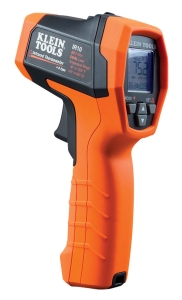
Table of Contentsexpand_more
Understanding Measurement & Detection: Analog vs. Digital Technology Trade-offs
Measurement & Detection technology in Singapore's industrial sector increasingly requires procurement engineers to evaluate the trade-offs between analog and digital sensor solutions. With 35+ years of experience distributing industrial equipment across Asia-Pacific, 3G Electric has observed significant shifts in how manufacturers approach sensor selection, particularly in high-humidity tropical environments like Singapore.
Analog sensors such as glycerin-filled manometers and mechanical pressure switches offer simplicity, cost-effectiveness, and immediate visual feedback. The Preciman Manometer ABS vert D80 0/+16bar G1/2 exemplifies this approach—a straightforward mechanical solution requiring no electrical power and providing ±2.5% accuracy suitable for hydraulic and pneumatic system monitoring.
Digital transmitters like the Dwyer Transmitter 629-05-CH-P2-E5-S1 deliver superior accuracy (0.5%), remote monitoring capabilities, and integration with Building Management Systems (BMS) and programmable logic controllers (PLCs). However, they introduce electrical complexity, calibration drift potential, and higher initial investment.
For Singapore procurement teams, the decision hinges on application-specific requirements: regulatory compliance, environmental conditions, maintenance accessibility, and total cost of ownership (TCO) over the system's lifecycle.
Performance Comparison: Accuracy, Response Time, and Environmental Resilience
Accuracy and Repeatability
Analog manometers typically achieve ±2.5% accuracy under stable conditions. The mechanical design of instruments like the Preciman model provides inherent repeatability without electronic drift. However, this accuracy depends heavily on proper vertical mounting and protection from vibration.
Digital transmitters like the DXW-11-153-4 and 629-05-CH-P2-E5-S1 offer superior accuracy (0.5% for transmitters, precise switching thresholds for pressure switches) but require regular calibration verification due to electronic component aging. In Singapore's humid environment (70–90% relative humidity year-round), electronic sensors face accelerated drift if not properly sealed.
Response Time and System Dynamics
Analog sensors respond instantaneously—mechanical pressure switches like the Dwyer DXW-11-153-4 activate within milliseconds of setpoint exceedance. This makes them ideal for safety-critical applications such as compressor unloading or overpressure protection in pneumatic systems.
Digital transmitters introduce sensor response delays (typically 200–500 ms) and signal processing latency (100–200 ms). For real-time process control in HVAC systems or flow monitoring applications using Dwyer Medium flow metal probe MAFS-20, this 300–700 ms total response lag may affect system stability if PID tuning is inadequate.
Environmental Performance in Tropical Conditions
Singapore's climate presents unique challenges. Glycerin-filled analog manometers remain stable across temperature ranges (-20 to +60°C) with minimal thermal drift. The glycerin medium also dampens pressure spikes common in compressor startup sequences.
Digital temperature sensors like the CBM Infrared thermometer with type K input offer flexibility across wide temperature ranges (-40 to 650°C) but demand careful sensor placement away from direct condensation and radiant heat. Thermal compensation algorithms can correct environmental effects, yet they require periodic verification against reference standards.
Selection Matrix: When to Deploy Each Technology
Analog Sensors—Optimal Applications
- Safety-critical overpressure protection: Mechanical pressure switches eliminate dependency on electrical power or calibration drift. Risk of undetected equipment damage outweighs cost savings from digital solutions.
- Compressed air and hydraulic system monitoring: Pneumatic/hydraulic fluids tolerate mechanical gauge operation without degradation. Visual confirmation of system state provides immediate operator feedback.
- Cost-constrained projects: Initial capital expenditure (CapEx) for a mechanical pressure switch (~SGD 150–300) versus digital transmitter (~SGD 800–1,500) justifies analog selection for non-critical monitoring.
- High-vibration environments: Manufacturing floors with compressors, presses, or shakers degrade digital sensor accuracy. Mechanical designs tolerate sustained vibration without recalibration.
- Centralized BMS integration: Modern HVAC and building automation systems require 4–20 mA or digital protocol signals. The 629-05-CH-P2-E5-S1 transmitter's IP65 rating and industrial protocol support justify higher cost through operational efficiency.
- Multi-parameter monitoring: Flow probes like the MAFS-20 provide velocity and volumetric flow data impossible with analog methods. This enables fault detection (clogged filters, pump degradation) unavailable through manual inspection.
- Compliance documentation: Pharmaceutical, semiconductor, and food processing facilities in Singapore's strict regulatory environment require automated data logging, audit trails, and calibration records—digital solutions provide this inherently.
- Thermal measurement across extreme ranges: The CBM infrared thermometer's non-contact measurement at 20:1 optical resolution addresses applications (furnace diagnostics, electrical panel monitoring) where contact-based analog sensors prove impractical.
Procurement Decision Framework: Total Cost of Ownership Analysis
Initial Capital Cost
Analog systems cost 60–70% less upfront. A Preciman manometer (SGD 200–400) plus mechanical pressure switch (SGD 150–300) totals SGD 350–700 versus a complete digital system (transmitter SGD 900–1,200 + signal conditioner SGD 300–500 + BMS integration SGD 1,000–2,000) at SGD 2,200–3,700.
Operational and Maintenance Costs
Analog sensors require minimal maintenance—annual visual inspection for glycerin clarity and mechanical corrosion. Replacement interval typically exceeds 10 years in stable environments.
Digital sensors demand:
- Calibration verification: Annual external calibration (SGD 150–300 per sensor) at accredited laboratories to maintain ±0.5% accuracy.
- Recalibration cycles: Electronic components drift typically 1–2% annually. After 3–5 years, accuracy may degrade below acceptable thresholds, requiring replacement rather than recalibration (cost-prohibitive).
- Integration support: BMS connectivity requires IT involvement, firmware updates, and potential security patches (SGD 500–1,500 annually for system support).
Analog sensors exhibit passive failure modes—mechanical pressure switches fail closed (safe-state) or open (fail-safe in unloading circuits). Operators detect failure through visual inspection or system behavior changes, allowing planned corrective action.
Digital transmitters fail unpredictably:
- Intermittent signal loss: Loose connectors, corroded terminals, or damaged shielding introduce measurement gaps without operator awareness, leading to incorrect control decisions.
- Sensor stuck readings: Electronic failure modes can produce false high or low readings, causing control system oscillation or unintended equipment shutdown.
- Cascading system failures: A single failed transmitter can propagate to dependent systems if the BMS logic lacks redundancy checks.
For critical applications, digital sensors require redundant measurement (dual transmitters) to achieve reliability equivalent to a single mechanical switch—further eroding cost advantage.
Procurement Recommendation
For most Singapore industrial facilities, a hybrid approach optimizes TCO:
1. Deploy analog sensors for primary safety functions (overpressure protection, emergency shutdown signals).
2. Layer digital transmitters for operational optimization (BMS integration, efficiency monitoring, trend analysis).
3. Include calibration verification contracts within supplier agreements to control hidden maintenance costs.
4. Specify IP65+ rated digital sensors to survive Singapore's humidity without premature failure.
3G Electric's 35+ years distributing industrial equipment throughout Asia-Pacific enables procurement teams to source both analog and digital measurement solutions tailored to specific application requirements, environmental conditions, and budget constraints. Our technical support team can advise on sensor selection, installation best practices, and maintenance protocols aligned with Singapore's industrial standards.
Troubleshooting Decision Tree: Diagnosing Performance Issues
Problem: System Reading Unstable or Drifting
If analog gauge (manometer/mechanical switch):
- Verify mounting—glycerin-filled instruments require level orientation (±2° from vertical). Tilt causes graduated scale misalignment.
- Inspect glycerin clarity—cloudiness indicates moisture ingress. Replace gauge assembly (~SGD 250–400).
- Check connection integrity—loose fitting or vibration-induced movement causes needle fluctuation. Retorque NPT connections and inspect for mechanical play.
- Request calibration certificate—drift exceeding ±0.5% indicates electronic component aging. Schedule external recalibration or replacement.
- Verify power supply stability—voltage ripple or inadequate grounding introduces measurement noise. Install shielded cable and confirm 24 VDC ±10% supply voltage.
- Inspect connector and cable—moisture, corrosion, or mechanical stress in field-mounted connections (common in humid Singapore climate) causes intermittent signal loss. Replace compromised connectors and re-terminate with conformal coating.
If analog pressure switch:
- Check differential setting—excessive hysteresis (gap between switch-on and switch-off points) masks setpoint changes. Verify differential range matches application (e.g., 3.46–5.17 bar for DXW-11-153-4) and adjust if configurable.
- Inspect internal poppet mechanism—debris or mineral deposits (common in compressed air with inadequate filtration) restrict valve movement. Flush system or replace switch.
- Confirm PID loop tuning—excessive proportional-integral-derivative gains delay response. Request controller configuration and compare against manufacturer's recommended settings for comparable systems.
- Measure actual signal delay—use oscilloscope to compare input step change against analog output at transmitter terminals. Compare against 300 ms expected total lag. Extended delays suggest sensor or wiring issues.
- Verify sensor output range—confirm 4–20 mA output spanning full 0–100 psid range (or application-specific range). Output saturation or offset indicates calibration error.
If analog manometer requires replacement:
- Isolate using ball valve (install shutoff on inlet if not present). Depressurize system.
- Install replacement Preciman manometer with matching range and accuracy class. Verify G1/2 connection thread matches original.
- Cost: SGD 250–450 including isolation ball valve.
- Maintain BMS communication during replacement—install a temporary jumper resistor (500 Ω) across 4–20 mA loop terminals before removal to prevent control system faults.
- Document original configuration (range, setpoint, output scaling, alarm thresholds) before removal.
- Install replacement transmitter and repeat calibration verification against reference sensor.
- Cost: SGD 900–1,200 plus calibration labor (SGD 150–300).
For Singapore-based procurement teams, 3G Electric provides replacement sensors, installation support, and technical guidance to minimize system downtime during component changeover.
![Airstat Buyer's Guide SG | TAT Broth Media [2026]](https://oxalncjenpflyqfncuhe.supabase.co/storage/v1/object/public/product-assets/grainger/62314438-78dc-4409-9813-a921ea1b50c8.jpg)