
Pumps & Compressors Capacity Planning: Matching Flow and Pressure to Southeast Asian Manufacturing Demands
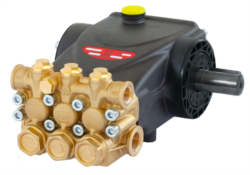
Table of Contentsexpand_more
Understanding Capacity Planning vs. Peak Demand
Capacity planning for Pumps & Compressors in Southeast Asian manufacturing plants requires clarity on a critical distinction: the difference between maximum system demand and average operational demand. Plant managers often inherit equipment specifications built around worst-case scenarios—a production line running at full load, all auxiliary systems active, and no margin for error. In reality, most facilities operate at 60–75% capacity on average days, with peak demand occurring only 10–15% of the time.
With 35+ years of experience supplying industrial equipment across Asia-Pacific, 3G Electric has observed that oversized pumps waste 15–25% more energy than right-sized alternatives. A common mistake: specifying a Interpump W2035 L ATEX delivering 35 L/min at 200 bar for an application that routinely needs only 20 L/min. The pump runs inefficiently, generates excess heat, and consumes unnecessary power.
Capacity planning starts with measuring your actual duty cycle. Over one operating week, document the flow demands at each process stage. Does your cooling loop run at full capacity all day, or only during peak production hours? Do your hydraulic presses cycle continuously, or in intermittent bursts? This real-world data becomes your foundation for equipment selection.
Duty Cycle Analysis: Matching Pump Specifications to Operating Reality
Duty cycle analysis translates production schedules into concrete pump specifications. Let's work through a practical example: a Southeast Asian food processing plant that runs a primary hydraulic circuit for conveyor systems, plus a secondary circuit for packaging equipment.
Primary conveyor system: Operates 16 hours daily at steady flow. Flow requirement: 22 L/min at 180 bar. Pressure spikes during jam clearing reach 210 bar for 5–10 minutes, three times per shift.
Packaging circuit: Intermittent demand, running 6 hours per day in 30-minute bursts. Peak flow: 18 L/min at 170 bar.
Traditional approach: Specify a single 40 L/min pump rated for 210 bar, then throttle the excess. Result: constant pressure loss, heat generation, and a pump oversized for 60% of operating hours.
Right-sized approach: Pair two smaller units. The Interpump E2C2111 L (11 L/min, 210 bar, 4.41 kW) handles base flow. The Interpump E2C1714 L (14 L/min, 170 bar, 4.56 kW) adds capacity during peak periods. Combined: 25 L/min available, both units operate near their sweet spot during normal hours, and total installed power is 8.97 kW instead of 15+ kW.
Duty cycle analysis reveals whether your plant benefits from fixed displacement pumps (steady demand) or variable displacement designs (intermittent loads). For Southeast Asian plants with seasonal production swings—common in beverage, textiles, and food processing—modular pump strategies offer flexibility without premature replacement.
The Pratissoli KF30 (106 L/min, 200 bar, 40 kW) suits large-scale operations with genuinely high, continuous demand: automotive suppliers, tier-one component manufacturers, and heavy equipment makers. But many mid-sized plants overshoot with this capacity. 3G Electric's experience shows that detailed duty cycle mapping prevents €4,000–8,000 in unnecessary equipment investment per installation.
Performance Tiers and Load-Sharing Strategies
Once you've analyzed your duty cycle, organize your pump selection by performance tier. This framework helps plant managers balance cost, redundancy, and energy efficiency.
Tier 1: Compact, Low-Flow Units (up to 14 L/min)
- Interpump E2C1714 L: 14 L/min @ 170 bar, 4.56 kW, 7 kg weight
- Use case: Secondary systems, pilot circuits, cooling loops, feed pumps
- Advantage: Minimal footprint, low installation cost, ideal for retrofit scenarios
- Southeast Asian advantage: Fits tight mechanical room spaces common in older Bangkok and Singapore plants
- Interpump SSU2040 R ATEX (40 L/min, 200 bar, 15.29 kW): Gear pump design, heavy-duty industrial duty
- Interpump W2035 L ATEX (35 L/min, 200 bar, 13.23 kW): Smaller footprint, ATEX-certified for hazardous areas
- Use case: Primary hydraulic circuits, production equipment, cleaning systems
- Southeast Asian advantage: ATEX models handle chemical processing facilities in Vietnam and Malaysia, where regulatory compliance is strict
- Pratissoli KF30 (106 L/min, 200 bar, 40 kW): Italian engineering, industrial-grade reliability
- Use case: Large-scale production lines, integrated hydraulic networks, tier-one manufacturing
- Southeast Asian advantage: Proven across major Thai and Malaysian automotive supply chains
Load-sharing strategies maximize efficiency when you operate across multiple tiers. A plant running three production lines might deploy one mid-range pump per line (Tier 2), each sized to 70–80% of peak line capacity. When all three lines run simultaneously, they approach system maximum without overloading any single unit. When one or two lines shut down (shift changes, maintenance), idle pumps can be isolated or operated at reduced displacement on variable models.
Energy Efficiency and Total Cost of Ownership Across Duty Cycles
Capacity planning directly influences energy consumption. Pumps running above their optimal displacement ("over-displacement") lose 8–12% of input power to heat and pressure throttling. In tropical Southeast Asia, where cooling costs already consume 15–20% of facility energy budgets, oversized pumps compound the problem.
Example calculation: A plant currently runs an oversized 50 L/min pump at 210 bar during a typical 8-hour shift, operating at only 30 L/min actual demand (60% idle capacity). Motor rating: 30 kW.
- Current annual energy cost: 30 kW × 8 hrs/day × 250 working days × 0.12 USD/kWh = USD 7,200
- Oversizing penalty (25% inefficiency at part load): +USD 1,800 annually
- Thermal load on cooling system (additional 5 kW): +USD 1,200 annually
- Total oversizing cost: USD 3,000/year
Replacing that pump with a Interpump SSU2040 R ATEX (40 L/min) sized to your actual 30–32 L/min demand reduces input power to ~18 kW and eliminates throttling losses.
- Revised annual energy cost: 18 kW × 8 hrs/day × 250 days × 0.12 USD/kWh = USD 4,320
- Thermal load reduction: –USD 800 annually
- Right-sized total cost: USD 4,320/year
- Annual savings: USD 2,880 plus reduced HVAC strain
Over a 10-year pump lifecycle, that's USD 28,800 in energy savings—far exceeding equipment replacement cost. 3G Electric's distributor network across Southeast Asia helps plant managers model these scenarios for their specific tariff rates and duty cycles.
Total cost of ownership (TCO) planning also considers maintenance intervals, replacement part availability, and local support. Interpump models maintain tight tolerances and require scheduled servicing; Pratissoli units tolerate heavier loads but need more frequent monitoring in extreme tropical environments (high humidity, dust). Work with your local 3G Electric distributor to establish a preventive maintenance schedule tied to your capacity plan.
Implementation: From Analysis to Specification
Capacity planning for Pumps & Compressors is not a one-time exercise. As your Southeast Asian facility scales production or adjusts its product mix, revisit your pump strategy annually. A three-step process brings clarity:
Step 1: Document actual demand data for 4 weeks
- Record flow, pressure, and duration for each operational phase
- Capture seasonal variation (e.g., holiday shutdowns, monsoon maintenance windows)
- Identify outlier events (equipment jams, emergency restarts) separately from baseline
- Match base-load demand to Tier 1 or Tier 2 equipment
- Allocate peak-load capacity to secondary or modular units
- Confirm compatibility with local electrical infrastructure (phase, voltage, cooling availability)
- High-duty pumps (90%+ capacity utilization) require more frequent servicing
- Low-duty pumps (40% utilization) can extend intervals
- Plan component replacement (seals, bearings) based on hours-on-load, not calendar time
With 35+ years supplying plants across Thailand, Vietnam, Malaysia, Singapore, and Indonesia, 3G Electric understands that capacity planning often reveals unexpected opportunities. Modular approaches, energy-efficient scaling, and load-sharing networks routinely cut operational costs by 20–35% while improving reliability.
Contact your local 3G Electric distributor to conduct a duty cycle analysis on your existing systems. Most assessments take 2–3 weeks of operational monitoring and result in a clear, data-driven specification for your next equipment purchase.
![Oil Pump Singapore: Complete Buyer's Guide [2026]](https://oxalncjenpflyqfncuhe.supabase.co/storage/v1/object/public/product-assets/grainger/84612678-850d-43eb-92ae-dcc86df1619a.jpg)
![Dayton Centrifugal Pump SG | Sizing Guide [2026]](https://oxalncjenpflyqfncuhe.supabase.co/storage/v1/object/public/product-assets/grainger/21a225f1-43ff-4290-a467-4a8181c4501a.jpg)


