
Pumps & Compressors in Mobile and Portable Applications: Equipment Selection for On-Site Industrial Operations
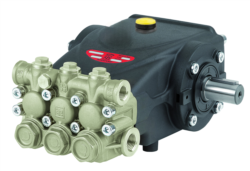
Table of Contentsexpand_more
Understanding Pumps & Compressors in Mobile Environments
Portable Pumps & Compressors represent a distinct category of industrial equipment designed for flexibility, transportability, and quick deployment. Unlike their stationary counterparts, mobile units must balance performance with practical constraints: weight limitations, single or three-phase power availability, and the ability to operate across varying environmental conditions.
Industrial professionals deploying equipment on-site face a critical reality: undersized units waste time and labor costs, while oversized equipment becomes difficult to transport and costly to operate. With 35+ years of experience supplying equipment globally, 3G Electric understands the specific challenges of mobile industrial operations. This guide provides actionable selection criteria for identifying pumps and compressors that deliver reliable performance in field deployment scenarios.
Performance Specifications: Matching Capacity to Field Requirements
Flow Rate and Pressure Demands
Field operations typically fall into distinct demand categories. Light-duty cleaning, mobile pressure washing, and portable surface preparation require moderate flow (5–15 L/min) at modest pressures (80–150 bar). For example, the Interpump GREEN JET GX24 VARIOJET CART delivers 7 L/min at 90 bar with a 1.75 kW motor—ideal for on-site equipment cleaning, surface preparation, and emergency containment washing without requiring three-phase power infrastructure.
Medium-duty field hydraulics, mobile drilling support, and portable surface treatment systems demand higher output: 15–25 L/min at 150–200 bar. The Interpump WS151 R ATEX provides 21 L/min at 150 bar with 5.51 kW operation, designed specifically for hazardous-area field work where ATEX compliance is mandatory. Industrial professionals can deploy this unit for temporary hydraulic service lines, emergency equipment repairs, or mobile drilling support without requiring permanent installation.
High-pressure specialty applications—advanced surface treatment, precision cleaning, mobile material handling—require 20+ L/min at 200+ bar. The Interpump PUMP W2035 L ATEX delivers 35 L/min at 200 bar with 13.23 kW capacity. This unit suits temporary high-pressure infrastructure deployment, mobile processing applications, and field operations requiring sustained high-pressure output with hazardous-area certification.
Power Source Compatibility
Field sites present unpredictable electrical infrastructure. Some installations offer only single-phase 230V power; others provide robust three-phase supply. Portable units must accommodate this variability.
Single-phase motors (typically 1–3 kW) work on standard industrial outlets available at most field sites. These units suit light-to-medium applications and require no electrical infrastructure upgrades. The GX24 VARIOJET operates on single-phase power, making it deployable to remote sites without electrical modifications.
Three-phase motors provide greater efficiency and power density, supporting heavier-duty operations. Units like the Interpump E3B2121I operate at 1450 rpm with 8.46 kW capacity and deliver 21 L/min at 210 bar—suitable for temporary high-pressure hydraulic infrastructure or mobile material handling systems requiring sustained performance.
When planning mobile deployments, confirm available electrical supply before equipment arrives. Standard field practice requires generator backup capacity: select generators rated 1.5× the motor's nameplate kW requirement to account for startup current and maintain stable voltage under load.
Portability and Installation Constraints
Weight and Footprint Considerations
Transportation logistics directly impact equipment selection. Field professionals must verify:
Vehicle Transport Capacity: Mobile equipment must fit within standard truck beds or trailers. Compact units like the GX24 VARIOJET (11.4 kg) load onto hand trucks or fit easily into equipment vans. Heavier units (40–80 kg) require equipment trailers or permanent mounting on work vehicles.
Installation Footprint: Temporary mounting locations (concrete pads, equipment racks, mobile platforms) have spatial constraints. The Interpump PUMP WW950 R+FL.184TC maintains a compact 225 mm footprint while delivering 9.5 L/min at 165 bar with 2.94 kW—enabling installation on crowded equipment platforms or mobile rig mounts where space is limited.
Foundation Requirements: Heavy-duty units (15+ kW) require vibration isolation and structural mounting. Field installations often use isolation pads and quick-disconnect coupling systems to enable rapid setup and relocation.
Rapid Deployment and Connection Systems
Industrial professionals minimize on-site assembly time through standardized quick-disconnect connections. High-pressure hose assemblies (SAE, ISO, or metric thread standards) should be pre-assembled before transport. Electrical connections require weatherproof junction boxes and ground-fault circuit protection in damp environments.
Attempting complex field assembly introduces multiple failure points: incorrect thread alignment, over-tightening of connections, and air entrapment in hydraulic lines. Best practice establishes complete hydraulic and electrical systems in controlled warehouse conditions, then transports ready-to-operate units to field sites.
Hazardous Area Compliance in Field Operations
Field sites frequently operate in classified hazardous environments: petroleum facilities, chemical processing areas, grain storage facilities, and mining operations. ATEX (European Atmosphere Explosible) certification becomes mandatory in these locations.
Both the W2035 L ATEX and WS151 R ATEX carry formal ATEX ratings, enabling legal and safe deployment in hazardous zones. Industrial professionals must:
- Verify area classification with facility safety engineers before equipment arrival
- Confirm certification level matches the specific hazardous zone (Zone 1 vs. Zone 2, for example)
- Document compliance in site safety records and equipment logs
- Train operators on ATEX requirements and equipment restrictions
Non-compliant equipment deployed in classified areas creates legal liability and immediate shutdown risk. Selecting ATEX-rated units for uncertain environments eliminates compliance uncertainty and protects both operations and personnel.
Practical Selection Framework for Field Deployment
Decision Matrix for Industrial Professionals
Step 1: Define Performance Requirements
Document the specific application: pressure range, flow volume, duty cycle (continuous vs. intermittent), and environmental conditions. Undersized equipment creates operational delays; oversized units drive unnecessary operational expense.
Step 2: Evaluate Power Availability
Confirm electrical supply at the deployment site (single-phase vs. three-phase, voltage stability, generator backup). Mismatched power supply causes equipment failure and site delays.
Step 3: Assess Physical Constraints
Measure available installation space, transport vehicle capacity, and foundation capability. Equipment that cannot be transported efficiently or installed safely has no value regardless of performance specifications.
Step 4: Confirm Hazardous Area Compliance
Determine if the site operates in a classified hazardous area. ATEX or equivalent certification is non-negotiable in explosive atmospheres.
Step 5: Calculate Total Cost of Ownership
Compare equipment cost against operational lifetime, fuel/power consumption, maintenance requirements, and potential rental flexibility. A more expensive unit with lower operating costs may deliver superior economics over extended deployment periods.
Real-World Application Scenarios
Scenario 1: Remote Site Equipment Cleaning
A field service company requires mobile pressure washing capability for equipment maintenance across multiple drilling sites. Single-phase power availability is inconsistent; transport must fit standard work vehicles. The GX24 VARIOJET (7 L/min, 90 bar, 1.75 kW single-phase) provides adequate cleaning capability without electrical infrastructure modifications.
Scenario 2: Temporary Hydraulic Infrastructure
A petrochemical facility requires temporary high-pressure hydraulic support for equipment commissioning in a Zone 1 hazardous area. The W2035 L ATEX delivers 35 L/min at 200 bar with full ATEX compliance, enabling safe temporary system deployment without permanent installation costs.
Scenario 3: Mobile Drilling Support
A drilling contractor operates across multiple sites requiring portable surface treatment and material handling pressure. Three-phase power is available at established work sites; transport utilizes equipment trailers. The Interpump E3B2121I (21 L/min, 210 bar, 8.46 kW) provides sustained high-pressure output with compact mounting suitable for mobile platform installation.
Maintenance and Reliability in Field Conditions
Mobile equipment operates under challenging conditions: temperature extremes, dust, moisture, and extended duty cycles without climate control. Reliable field operations require:
Pre-Deployment Inspection: Verify fluid condition, filter cleanliness, and connection integrity before departure. Field failures caused by pre-existing maintenance issues waste time and create safety hazards.
Inventory Management: Carry spare high-pressure hoses, coupling assemblies, and fluid reservoirs. Remote field sites lack immediate parts availability; equipment downtime translates directly to project delays.
Operator Training: Field personnel must understand equipment limitations, shutdown procedures, and emergency response. Improper operation damages equipment and creates personnel risk.
Documentation: Maintain detailed operating logs, maintenance records, and inspection reports. Field equipment typically transfers between multiple operators and sites; accurate documentation prevents knowledge loss and supports troubleshooting.
With 35+ years of experience supplying industrial equipment globally, 3G Electric understands that field operations demand equipment selected specifically for portability, reliability, and practical deployment constraints. Equipment selected solely on maximum performance specifications often fails in real-world field conditions due to power availability mismatches, transportation constraints, or inadequate hazardous-area compliance.
Industrial professionals achieve reliable field operations through systematic selection: matching equipment capacity to actual application requirements, confirming power and installation compatibility, verifying hazardous-area compliance, and establishing preventive maintenance practices before deployment. This disciplined approach minimizes on-site failures, reduces total operational cost, and ensures safety compliance across diverse field environments.
![Oil Pump Singapore: Complete Buyer's Guide [2026]](https://oxalncjenpflyqfncuhe.supabase.co/storage/v1/object/public/product-assets/grainger/84612678-850d-43eb-92ae-dcc86df1619a.jpg)
![Dayton Centrifugal Pump SG | Sizing Guide [2026]](https://oxalncjenpflyqfncuhe.supabase.co/storage/v1/object/public/product-assets/grainger/21a225f1-43ff-4290-a467-4a8181c4501a.jpg)


