Pumps & Compressors for Southeast Asian HVAC: Climate-Specific Selection and Installation
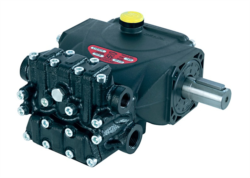
Table of Contentsexpand_more
Understanding Southeast Asian Climate Demands on Pumps & Compressors
HVAC contractors in Southeast Asia operate in one of the world's most demanding environments for mechanical equipment. Pumps & Compressors installed in tropical climates face challenges that differ significantly from temperate regions: sustained high temperatures (35-40°C ambient), extreme humidity levels (80-95%), salt-air corrosion in coastal areas, and inconsistent power supply quality. These conditions accelerate wear, increase cooling load demands, and create pressure fluctuations that standard equipment often struggles to handle.
With over 35 years of experience distributing industrial equipment globally, 3G Electric understands that Southeast Asian HVAC systems require thoughtfully selected pumps and compressors engineered for these specific conditions. Unlike generic equipment specifications, climate-adapted selection ensures longer service life, improved efficiency under thermal stress, and reduced unplanned downtime that disrupts building operations in high-occupancy commercial and industrial facilities.
The primary challenge for HVAC contractors is matching pump and compressor specifications to regional realities: higher cooling loads requiring greater flow rates, elevated pressure demands in chiller systems, and the need for corrosion-resistant materials. A system sized for temperate climates will operate at constant high load in Southeast Asia, reducing component lifespan and increasing energy consumption by 15-25%.
Selecting the Right Pump Specifications for Tropical HVAC Systems
Flow Rate and Pressure Matching for High-Load Conditions
Southeast Asian commercial HVAC systems typically require 20-30% higher cooling capacity than equivalent temperate-climate installations due to sustained heat gain. This translates directly to pump selection: your circulating pumps must deliver adequate flow while maintaining sufficient pressure for distribution across extended piping networks in large facilities.
The Pratissoli KF30 offers 106 L/min flow at 200 bar pressure with 40 kW input—an ideal baseline for medium-capacity chiller loops serving 2,000-3,000 m² climate-controlled spaces. For larger installations serving office towers or industrial facilities, the Pratissoli MW40 delivers 211 L/min at 210 bar with 85 kW power, handling distributed systems with multiple zones and extended piping runs common in Bangkok, Singapore, and Jakarta's commercial real estate.
Material Selection for Corrosion Resistance
Tropical humidity and salt-air exposure accelerate corrosion in ferrous materials. Stainless steel construction becomes essential for coastal installations—salt spray can corrode standard mild steel pump housings within 12-18 months. Pratissoli's SS71 series, including the Pratissoli SS71153, features stainless steel construction rated for 160 bar at 122 L/min, specifically engineered to resist the corrosive environment of tropical climates. The PTFE sealing in models like the Interpump ET1C1612 provides superior chemical resistance compared to standard elastomer seals that degrade rapidly in high-humidity conditions.
Compact Installation for Limited Space
Urban Southeast Asian facilities often feature space constraints requiring compact pump installations. The Interpump E1D1808 delivers impressive performance in a minimal footprint—8 L/min at 180 bar in just 5 kg, making it suitable for confined mechanical rooms in retrofitted buildings or compact chiller package arrangements. Vertical stacking of smaller capacity units often proves more practical than attempting to fit oversized pumps into existing infrastructure.
Installation Best Practices for Tropical HVAC Environments
Vibration Isolation and Thermal Management
High ambient temperatures and sustained operating loads increase thermal stress on pump bearings and seals. Installation must prioritize vibration isolation using elastomer mounts rated for tropical conditions—standard rubber deteriorates in sustained 35-40°C environments. Use synthetic elastomer or cork-based isolation pads specifically designed for tropical applications, replaced every 18-24 months rather than the typical 3-4 year interval recommended for temperate climates.
Thermal management extends beyond the pump itself. Circulating fluid temperatures in Southeast Asian chiller systems regularly exceed 50°C during peak cooling demand. Install temperature monitoring at pump inlet and outlet; if fluid temperature consistently exceeds 55°C, the system is running at critically high thermal stress. This indicates undersizing (requiring pump upgrade) or fouling in the chiller heat exchanger (requiring immediate cleaning).
Corrosion-Resistant Piping and Fittings
Copper and brass fittings corrode rapidly in coastal salt-air environments. Specify stainless steel or nickel-plated fittings throughout the pump inlet and discharge lines. For extended piping runs, consider stainless steel tubing rather than traditional copper—initial cost is 30-40% higher, but replacement frequency drops from every 5-7 years to 15+ years, reducing total cost of ownership.
Flexible connections at pump inlet/discharge must use stainless steel braided hoses rated for your system pressure. Standard rubber hose degrades in tropical heat and ozone exposure within 2-3 years; upgrade to synthetic EPDM rated for 60°C continuous operation. Check hose connections quarterly; tropical humidity accelerates corrosion of standard brass hex nuts—replace with stainless steel hardware.
Power Supply Conditioning for Reliability
Southeast Asia's power infrastructure often experiences voltage fluctuations and harmonic distortion that can reduce motor lifespan. Install voltage stabilizers (±5-10% regulation) for all pump motors exceeding 30 kW. Soft-start devices are essential—they reduce the inrush current that destabilizes facility electrical systems and stresses pump bearings during startup. In facilities with unreliable three-phase power, consider variable frequency drives (VFDs) that condition incoming power while improving energy efficiency by 20-30% through demand-responsive speed control.
Regional Maintenance Protocols and Operational Strategies
Fluid Management in High-Humidity Environments
Hydraulic and refrigeration fluids absorb moisture from tropical air far more readily than in temperate climates. Implement monthly fluid sampling for water content and acid number analysis rather than semi-annual checks. When water content exceeds 200 ppm, fluid must be replaced immediately—water causes pump corrosion, bearing wear, and seal degradation. In coastal facilities, monthly testing is non-negotiable; I-class humidity (near-salt) accelerates fluid degradation by 40-50%.
Fluid filtration requires upgrade from standard 10-micron elements to 3-micron absolute filtration, extending change intervals from 6 months to 12 months while protecting pump internals from accelerated wear. Install high-capacity desiccant breathers on expansion tanks—standard fabric breathers are insufficient in humid climates and allow moisture ingress that contaminates entire fluid systems.
Preventive Shutdown and Inspection Cycles
Unlike temperate climates where seasonal HVAC variation provides natural maintenance windows, Southeast Asian facilities operate at sustained high capacity year-round. Establish quarterly shutdown windows (12-24 hours during lowest-occupancy periods) for visual inspection of pump seals, coupling alignment, and vibration monitoring. Early detection of bearing wear through vibration analysis prevents catastrophic failures that leave large facilities without cooling during peak heat periods.
Schedule major pump overhauls every 3,000-4,000 operating hours (roughly 18-24 months at continuous operation) rather than the 5,000-6,000 hour intervals standard for temperate climates. Tropical operating conditions accelerate internal wear; bearing and seal replacement at these shorter intervals prevents sudden failures. 3G Electric's 35 years of global distribution experience shows that this aggressive maintenance schedule reduces total downtime by 60-70% compared to reactive replacement in tropical regions.
Spare Parts Strategy for Supply Chain Resilience
Southeast Asian logistics networks are subject to typhoon disruptions, port congestion, and variable customs clearance times. Maintain on-site spare seals, gaskets, and bearing assemblies for critical pump models. For the KF30 and MW40 units from Pratissoli, stock 2-3 complete seal assemblies and bearing kits—these represent <5% of pump cost but eliminate 2-4 week lead times for imported replacement parts when equipment fails unexpectedly.
Develop relationships with regional distributors who maintain local inventory. 3G Electric's global network enables rapid parts fulfillment to Southeast Asian facilities, reducing emergency replacement costs that can exceed 300% of standard procurement when facilities lack climate control during critical operational windows.
Compressor Selection for Tropical Climate Control Systems
While reciprocating and screw compressors are standard in Southeast Asian industrial cooling systems, HVAC contractors increasingly integrate compressors into chiller packages and emergency cooling solutions. Selection criteria differ markedly from temperate applications: higher suction temperatures (45-50°C vs. 35°C standard), elevated condenser pressure requirements, and heat-rejection demands that test capacity limitations.
For systems requiring localized high-pressure capability, the Interpump E1D1808 at 180 bar serves specialty cooling applications where compact sealed systems are essential. The 2800 rpm operating speed with 2.72 kW input allows flexible belt-drive or direct coupling configurations in confined tropical mechanical rooms.
Thermal management is critical: ensure compressor discharge air has unrestricted flow to ambient. Southeast Asian mechanical rooms often lack adequate ventilation; temperature-controlled compartments for compressors are essential where ambient exceeds 40°C. Install temperature-triggered shutdown at 65°C discharge—operation above this threshold degrades refrigeration oil and accelerates seal wear to critical levels.
![Oil Pump Singapore: Complete Buyer's Guide [2026]](https://oxalncjenpflyqfncuhe.supabase.co/storage/v1/object/public/product-assets/grainger/84612678-850d-43eb-92ae-dcc86df1619a.jpg)