Burners & Combustion: Oil vs. Gas Burner Selection, Efficiency Metrics & Retrofit Integration for Singapore HVAC Contractors
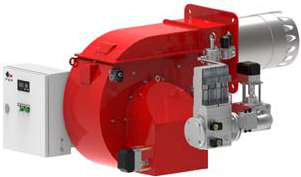
Table of Contentsexpand_more
Understanding Oil vs. Gas Combustion Technologies for Singapore Operations
Burners & Combustion system selection represents one of the most consequential decisions HVAC contractors face when designing heating solutions for commercial and industrial facilities across Singapore. The choice between oil and gas burner technologies fundamentally impacts installation timelines, maintenance requirements, operational efficiency, and lifecycle costs.
Oil burners operate through atomization and air-fuel mixing, requiring precision nozzles, pressure atomization, and robust fuel supply conditioning. Gas burners employ simpler ignition sequences but demand tighter air-fuel ratio control. For Singapore's tropical climate with high-humidity coastal environments, each technology presents distinct advantages and maintenance considerations.
3G Electric has supported Southeast Asian HVAC contractors for over 35 years, helping them navigate these selection decisions with equipment like the Beckett CF3500 Oil Burner and industrial-scale solutions such as the FBR HI-GAS P550/M CE TL gas burner. Understanding the technical distinctions enables contractors to specify systems aligned with facility requirements, fuel availability, and operational constraints.
Oil Burner Systems: Architecture, Efficiency & Maintenance Requirements
Combustion Efficiency and Flame Characteristics
Oil burners achieve 80-85% seasonal efficiency in well-maintained systems, with combustion efficiency reaching 85-88% under optimal conditions. The Beckett CF3500 Oil Burner exemplifies commercial-grade oil combustion, rated 17-35 GPH with direct spark ignition and flexible voltage options suitable for both single-phase and three-phase electrical installations.
Oil atomization quality directly influences combustion completeness. Pressure atomization at 100-200 PSI creates fine fuel mist, ensuring rapid vaporization and uniform air-fuel mixing. Poor atomization causes:
- Unburned fuel deposits in combustion chambers
- Increased particulate emissions and smoke
- Higher maintenance intervals due to nozzle fouling
- Reduced efficiency and heat output consistency
For flame detection in oil burner systems, the Combutech UV1p detection cell provides spectral response between 185-260 nm, optimally matching the UV signature of oil flame radiation. With IP65 rating and 20 µS recovery time, it reliably detects flame presence even in challenging industrial environments with ambient light interference.
Oil Supply and Fuel Treatment Considerations
Singapore's humidity and temperature variations necessitate robust fuel conditioning. Oil burners require:
- Fuel storage with secondary containment (environmental compliance)
- Pre-burner heating to reduce viscosity (typically 130-150°F for No. 2 oil)
- Two-stage filtration (100 micron primary, 10 micron secondary)
- Water removal through settling or centrifugal separators
- Annual fuel polishing to remove oxidized particles
Oil burners demand more frequent maintenance—nozzle inspection every 250-500 operating hours, electrode gap verification, and electrodes replacement annually. Extended downtime during maintenance impacts facility operations more significantly than gas systems.
Installation and Retrofit Complexity
Oil burner installation requires:
- Above-ground or buried storage tank with leak detection
- Fuel supply piping with pressure relief and return lines
- Dedicated boiler room ventilation (combustion air supply)
- Fuel pump and filter housing integration
- Ash pit cleanout and chimney draft verification
For retrofits in existing facilities, contractors often face space constraints in compact boiler rooms, requiring creative fuel tank positioning and extended supply line runs that increase pressure drop and pump stress.
Gas Burner Systems: Modulation Capability, Efficiency & Control Integration
Combustion Efficiency and Turndown Ratios
Gas burners achieve 85-90% seasonal efficiency with modern condensing designs. Industrial solutions like the FBR HI-GAS P550/M CE TL deliver 2325-6395 kW output with progressive and modulating combustion capability, enabling turndown ratios of 5:1 to 10:1 in larger commercial systems.
Modulation allows burners to reduce fuel flow in response to facility heating load, improving part-load efficiency significantly. This contrasts with oil burners, which typically cycle on-off and cannot modulate smoothly without custom control integration.
The FBR GAS/M CE D2"S-F-50 with DX90 control option exemplifies this capability, delivering output range 485-4070 kW with 535 mm nozzle design. Progressive burner sequencing reduces NOx emissions and improves thermal comfort through finer load matching.
Fuel Supply and Regulatory Compliance
Gas burner systems simplify infrastructure requirements:
- Direct connection to city gas supply (low-pressure distribution)
- No storage tank, eliminating secondary containment complexity
- Odorized fuel detection by occupants (safety advantage)
- Simpler maintenance—annual nozzle inspection, control valve testing
- Lower parts inventory for spare components
Singapore's natural gas distribution network makes gas burners increasingly practical for commercial facilities with mains supply availability. However, contractors must verify:
- Gas supply pressure stability (typically 20-25 mbar city gas)
- Regulator sizing for instantaneous load demand
- Isolation valve placement and emergency shutoff accessibility
- Supply line material (steel, copper, or approved flexible)
Control Integration and Flame Detection Architecture
Gas systems integrate flame detection more seamlessly than oil burners. The Combutech Flame relay CF1 supports up to 10 UV detectors with 1 A @ 250 VAC and 1 A @ 30 VDC rating, enabling distributed flame sensing across multiple burner stages in progressive systems.
Modern gas burner controls incorporate:
- Automatic ignition retry logic (prevents lockout on transient flame loss)
- Air-gas ratio optimization through combustion air fan modulation
- Temperature limit protection and low-water cutoff integration
- Cascade control for multi-burner installations
- Remote monitoring and diagnostic messaging via BACnet or Modbus
Practical Selection Framework: Oil vs. Gas for Singapore Contractors
Facility-Specific Decision Criteria
Contractors should evaluate:
1. Fuel Availability and Cost Stability
- Gas: Access to mains supply determines feasibility; long-term price escalation predictable
- Oil: Greater price volatility; supply interruptions possible during regional disruptions
- Gas: Minimal space requirements; no storage tanks; suitable for compact boiler rooms
- Oil: Demands dedicated tank space; secondary containment requirements increase footprint
- Gas: Simpler maintenance; local technicians readily qualified
- Oil: More complex servicing; requires specialized nozzle replacement and fuel treatment knowledge
- Gas: Lower NOx emissions (meets Singapore Environment Institute standards); no spill risk
- Oil: Stricter storage regulations; annual environmental audits common in industrial zones
- Gas: Superior efficiency at part-load operation; cost-effective for variable-load facilities
- Oil: Acceptable for continuous, steady-load applications (process heating, district heating)
- Gas: Lower retrofit cost if mains supply nearby; eliminates legacy tank infrastructure
- Oil: Justifiable if existing tanks functional and facility lacks gas supply access
Retrofit Integration Strategy for Existing Systems
When upgrading legacy burner installations, contractors face three primary scenarios:
Scenario 1: Direct Replacement (Same Fuel Type)
Simplest approach—replace burner unit while retaining fuel supply infrastructure. Apply to oil-to-oil or gas-to-gas transitions. Key considerations:
- Verify boiler combustion chamber dimensions match new burner envelope
- Confirm existing control wiring compatibility (some legacy controllers require adapter modules)
- Test fuel supply pressure and flow rate before installation
- Commission new burner with combustion analyzer to verify CO2 and O2 levels
More complex retrofit requiring infrastructure changes. Oil-to-gas conversion typically preferred in Singapore due to:
- Eliminates decommissioning and tank remediation costs
- Reduces ongoing maintenance burden
- Aligns with urban environmental initiatives
Gas-to-oil conversion less common but may occur in facilities with unreliable gas supply or process heating requiring stable pressure.
Conversion steps:
1. Confirm boiler chamber compatible with new burner technology
2. Install new fuel supply infrastructure (pipeline or tank with filtration)
3. Remove or repurpose old fuel system components
4. Commission new burner and perform emissions testing
5. Update facility maintenance procedures and training materials
Scenario 3: Hybrid or Dual-Fuel Systems
Some large facilities install dual-fuel burner capability to hedge against fuel supply interruptions or price volatility. Progressive burner logic can sequence oil and gas stages, or single burners can operate alternately. This approach requires:
- Dual fuel supply lines with isolation and check valves
- Control logic to detect fuel pressure and select active fuel
- More frequent maintenance and seal inspections
- Higher capital cost (justifiable only for mission-critical heating)
Flame Detection and Safety System Alignment
Both oil and gas burners require integrated flame detection to prevent unsafe operation and unburned fuel accumulation. The Combutech UV1p detection cell excels in both applications with:
- 185-260 nm spectral response matching both oil and gas flame signatures
- IP65 rating protecting against boiler room moisture and dust
- 20 µS recovery time enabling fast flame loss detection
- Ø 35 × 80 mm compact form factor suitable for confined burner installations
Coupled with the Combutech Flame relay CF1, detection systems support up to 10 UV sensors, enabling distributed flame monitoring across progressive burner stages. This modular architecture allows contractors to expand systems as facility requirements grow.
Singapore-Specific Operational Considerations
Climate and Environmental Factors
Singapore's high humidity, salt-laden air (coastal), and temperature stability (26-32°C year-round) create unique combustion system challenges:
- Humidity impact: Oil systems prone to water ingress; regular fuel polishing essential. Gas systems unaffected.
- Salt corrosion: Steel boiler tubes and exhaust flues corrode faster; stainless steel or protective coatings recommended.
- Constant temperature: Less seasonal cycling stress; however, year-round air-conditioning loads extend burner operating hours, accelerating component wear.
Regulatory Compliance Framework
Singapore's Environmental Protection and Management Act (EPMA) and Energy Conservation Act (ECA) impose:
- Annual energy audits for facilities >500 kW energy consumption
- Mandatory efficiency labeling for new boiler installations
- NOx and particulate emission limits (1st Schedule, EPMA)
- Fuel storage secondary containment (100% tank volume minimum)
Contractors must ensure selected burners comply with these standards. Gas burners naturally achieve lower emissions; oil systems require premium nozzles and combustion air controls.
Conclusion
Burners & Combustion system selection demands careful evaluation of fuel type, facility infrastructure, maintenance capacity, and regulatory alignment. 3G Electric's 35+ years supporting Southeast Asian HVAC contractors provide access to trusted equipment like the Beckett CF3500 Oil Burner and FBR HI-GAS P550/M CE TL, enabling contractors to deliver reliable heating solutions tailored to Singapore's operational environment.
For most modern commercial installations in Singapore, gas burners offer superior efficiency, reduced maintenance, and environmental alignment. However, oil systems remain appropriate for process heating applications and facilities lacking gas supply access. Retrofit projects demand systematic evaluation of existing infrastructure, facility constraints, and long-term operational objectives to ensure cost-effective upgrades.
Integrating modern flame detection technology—such as the Combutech UV1p detection cell and Combutech Flame relay CF1—ensures burner safety and operational reliability regardless of fuel type selected. Regular maintenance aligned with equipment specifications and local environmental conditions maximizes system lifespan and maintains peak combustion efficiency throughout the facility's operational life.
![Gas Burner Types SG | Selection Guide [2026]](https://oxalncjenpflyqfncuhe.supabase.co/storage/v1/object/public/product-assets/products/907afddd-f10f-4f84-8526-06f1efc8daa0/002449_41.png)