Burners & Combustion: Thermal Efficiency Optimization and Load Response Management for Southeast Asian Industrial Plants
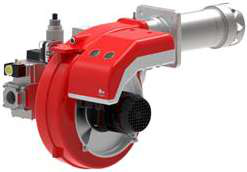
Table of Contentsexpand_more
Understanding Thermal Efficiency in Industrial Burner Systems
Thermal efficiency in Burners & Combustion applications represents the percentage of fuel energy converted to useful heat versus energy lost through exhaust, radiation, and incomplete combustion. For plant managers overseeing continuous or semi-continuous operations across Southeast Asia, this metric directly impacts operating costs, regulatory compliance, and equipment longevity.
Most industrial gas burners operate at 85–92% thermal efficiency under design conditions, but actual plant performance typically ranges between 75–85% due to part-load operation, air-fuel ratio drift, and maintenance-related performance degradation. Southeast Asian plants operating in tropical humidity and variable ambient temperature conditions face additional efficiency challenges. The high ambient temperatures (30–38°C typical) reduce combustion air density, requiring burner control systems to compensate through increased air volume or fuel adjustment—both of which impact efficiency if not actively managed.
3G Electric's 35+ years of experience distributing industrial burner equipment across APAC regions has identified that 60–70% of efficiency losses in mature installations stem from three controllable factors: inadequate burner modulation, drift in air-fuel ratio calibration, and insufficient maintenance of combustion air intake systems. Unlike single-stage burners, modern two-stage and modulating burners such as the FBR GAS X3/2 CE-LX4 TL Cl. 4 deliver significant efficiency gains by matching burner firing rate to actual heat demand rather than cycling on-off.
Modulation Strategies and Load Response Management
Modulation is the burner's ability to adjust firing rate across a defined range—typically 1:4 or 1:8 turndown ratio—while maintaining stable combustion and consistent steam/hot water outlet temperatures. Plant managers must distinguish between three modulation approaches, each with distinct efficiency and reliability implications:
Two-Stage Modulation represents the most common approach in mid-scale Southeast Asian installations. The burner operates at low fire (typically 50% capacity) or high fire (100% capacity), cycling between these states to match load. The FBR GAS X3/2 CE-LX4 TL Cl. 4 exemplifies this design with 23–174 kW capacity across two firing steps. Two-stage modulation provides simplicity and reliability but generates thermal cycling in the boiler or furnace, reducing efficiency by 3–5% compared to proportional modulation. This approach suits batch processes and plants with step-load changes rather than continuous ramp variations.
Proportional Modulation enables continuous burner output adjustment across the full firing range via a servo-controlled fuel valve and air damper system. Large-scale applications such as those served by the FBR HI-GAS P1500/M CE TL (4186–15116 kW) or the FBR HI-GAS P650/M CE TL (3488–7558 kW) use proportional modulation to maintain tighter outlet temperature control and reduce thermal cycling losses. Southeast Asian plants with variable steam demand—such as food processing, textile dyeing, or chemical manufacturing—benefit most from proportional systems. However, proportional burners demand more sophisticated control logic and higher maintenance frequency to maintain air-fuel ratio accuracy.
Demand-Responsive Modulation integrates outdoor air temperature compensation, inlet water/steam temperature feedback, and predictive load algorithms to proactively adjust burner output before deviation occurs. Premium installations in Singapore and Malaysia increasingly adopt this approach to manage the thermal swings caused by tropical climate variation and equipment cycling.
For plant managers implementing load response improvements, the practical starting point is establishing baseline efficiency data. Record burner firing rate, flue gas oxygen concentration (O₂), stack temperature, and outlet steam/water temperature at 30-minute intervals across one full week of operation. Southeast Asian plants typically observe O₂ drift of 0.5–1.5% between maintenance cycles due to air intake fouling from dust, humidity, and industrial fallout. A proportional burner maintaining 3.5–4.5% O₂ at low fire delivers 2–4% better efficiency than a two-stage unit cycling between 2.8% and 5.2% O₂ at high and low fire respectively.
Air-Fuel Ratio Tuning and Combustion Quality Control
Combustion quality depends critically on maintaining the optimal air-fuel ratio—the mass ratio of combustion air to fuel. Stoichiometric combustion (theoretical minimum air for complete fuel burning) occurs at 17.2:1 for natural gas; practical burner operation targets 18–19:1 to ensure complete combustion without excessive excess oxygen.
Southeast Asian humid tropical environments introduce specific challenges. High ambient moisture (70–90% relative humidity typical) reduces the density of combustion air by approximately 1–2%, meaning a burner set to deliver 100 kg/h of combustion air during dry-season commissioning will actually deliver only 98–99 kg/h during monsoon season. Without active compensation, this shifts the air-fuel ratio from optimal toward fuel-rich conditions, increasing carbon monoxide (CO) emissions, reducing thermal efficiency, and accelerating combustion chamber deposits.
Practical air-fuel ratio management involves three intervention points:
Point 1: Combustion Air Quality and Intake System Maintenance. Most industrial burners draw intake air from the boiler room or furnace hall. Southeast Asian plants frequently allow combustion air intakes to accumulate dust, lint, and debris—particularly in textile mills, food processing facilities, and cement works. Monthly inspection and quarterly cleaning of intake filters, ducting, and burner air registers should be non-negotiable maintenance tasks. A 10 mm layer of dust on air intake screening reduces flow by 8–12%, directly degrading efficiency and increasing O₂ concentration drift. The FBR GAS X3/2 CE-LX4 TL and other burners include intake shrouds designed for easy cleaning; confirm that maintenance teams have documented cleaning procedures and spare intake elements in stock.
Point 2: Flue Gas Analysis and O₂ Trim Control. Advanced combustion control systems feature O₂ trimming: automatic adjustment of the air-fuel ratio based on continuous flue gas oxygen measurement. O₂ sensors installed in the flue stack relay real-time data to the burner control unit, which adjusts fuel valve position and air damper setting to maintain target O₂ (typically 3.5–4.5% for natural gas). Southeast Asian plants operating proportional burners such as the FBR HI-GAS P550/M CE TL should prioritize O₂ trim installation if not already fitted. The payback period typically ranges from 8–16 months through improved efficiency and reduced fuel consumption. Ensure that O₂ sensor location avoids stratified zones in the flue; best practice places sensors 1–2 meters downstream of the burner exit where flow is fully mixed.
Point 3: Fuel Supply Pressure and Temperature Stability. Gas burners require stable inlet pressure within ±5% of design specification; pressure swings cause air-fuel ratio drift independent of burner control action. Southeast Asian plants should install pressure gauges at the burner inlet and maintain a daily log, particularly during high-demand periods (morning startup, peak production). Temperature stability also matters: gas density and calorific value change measurably with temperature. A 10°C rise in gas temperature reduces gas density by approximately 3.3%, shifting the air-fuel ratio toward fuel-rich conditions. Fuel gas coolers or heat exchangers positioned upstream of the burner pressure regulator address this issue in plants where inlet gas temperature exceeds 40°C.
Real-Time Performance Monitoring and Continuous Optimization
Plant managers must distinguish between one-time efficiency audits and continuous operational monitoring. Audits identify baseline performance but do not prevent degradation. Continuous monitoring using industrial IoT sensors and data logging systems enables predictive intervention before efficiency decline becomes visible in fuel bills.
A practical monitoring framework for Southeast Asian plants includes:
Tier 1 Monitoring (Essential). Record burner on-off cycling frequency, flue gas temperature, outlet steam/water temperature, and fuel consumption (gas meter reading) at daily intervals. Trend this data over 4–8 weeks to establish baseline patterns. Sudden increases in cycling frequency or flue gas temperature indicate combustion quality degradation or control system drift. Most medium-scale plants can implement Tier 1 monitoring with manual daily readings and a spreadsheet; no capital investment required.
Tier 2 Monitoring (Recommended for continuous processes). Install automated data loggers at key points: fuel inlet pressure, combustion air temperature, flue gas oxygen, flue gas temperature, and outlet process temperature. Log data at 15-minute intervals and calculate rolling 24-hour and 7-day averages. Use this data to detect drift trends before they trigger alarms. Many burner suppliers, including the manufacturers of FBR HI-GAS P1500/M CE TL and FBR HI-GAS P650/M CE TL units, provide optional remote monitoring modules compatible with Southeast Asian industrial networks. Tier 2 implementation typically costs $3000–$8000 USD including instrumentation, but delivers ROI within 18–24 months through optimized fuel consumption.
Tier 3 Monitoring (Advanced optimization). Deploy predictive algorithms integrating outdoor temperature, production schedule, historical consumption patterns, and real-time burner parameters to forecast optimal burner setpoints 4–12 hours in advance. This approach requires collaboration with control system integrators and is most practical for large-scale plants or multisite operations. Tier 3 systems reduce fuel consumption by an additional 2–3% beyond Tier 2 baselines and require significant ongoing expertise.
Regardless of monitoring tier, Southeast Asian plant managers should implement quarterly thermal efficiency audits conducted by qualified technicians. These audits measure flue gas composition (O₂, CO, CO₂, NOₓ), stack temperature, and calculate actual efficiency using the indirect method (flue gas analysis) rather than relying on nameplate specifications. Quarterly audits cost $800–$1500 USD per session but identify maintenance needs, calibration drift, and equipment degradation before efficiency losses compound.
Dual-fuel burners such as the FBR KN 350/M (465–4070 kW heavy oil/gas capable) require additional monitoring complexity: tracking fuel switchover events and validating that cross-fuel contamination does not occur. Maintain separate fuel quality logs for gas and heavy oil, and schedule fuel system inspections before switchover periods.
Implementing Efficiency Improvements: Prioritization and Investment Strategy
Plant managers face competing capital demands. Prioritize burner and combustion system improvements using this framework:
Priority 1 (Immediate, 3-month payback). Combustion air intake cleaning, flue gas sampling and analysis, fuel inlet pressure regulation upgrade, and burner control calibration verification. These interventions cost $2000–$5000 USD but typically recover 2–4% efficiency loss from operational drift. For a plant consuming 5000 kg/h of natural gas, this translates to $15,000–$30,000 annual savings at current Southeast Asian industrial gas rates ($8–$12/GJ).
Priority 2 (Medium-term, 12–18 month payback). Retrofit proportional modulation and O₂ trim control systems on existing two-stage burners, or replace aging single-stage units with modern two-stage burners like the FBR GAS X3/2 CE-LX4 TL Cl. 4. Capital cost ranges $8000–$20,000 USD, but efficiency gains of 3–6% are typical, delivering annual savings of $25,000–$60,000 for medium-scale installations.
Priority 3 (Long-term, 24–36 month payback). Complete burner system replacement with high-efficiency proportional units matching current production demand, automatic O₂ trimming, and integrated data logging. For large facilities, consider modular burner systems allowing flexible capacity as production changes. The FBR HI-GAS P550/M CE TL and FBR HI-GAS P650/M CE TL exemplify modern proportional designs suitable for large-scale continuous operations. Capital cost $30,000–$80,000 USD, but efficiency gains reach 5–10% with total annual savings of $60,000–$150,000 USD depending on baseline performance and operating hours.
3G Electric's three decades of Southeast Asian industrial distribution experience demonstrates that most plant efficiency improvements concentrate in Priority 1 and 2 categories—low-cost interventions delivering rapid return. Engage with experienced burner technicians early to conduct baseline performance audits and identify site-specific improvement opportunities rather than applying generic recommendations.
![Gas Burner Types SG | Selection Guide [2026]](https://oxalncjenpflyqfncuhe.supabase.co/storage/v1/object/public/product-assets/products/907afddd-f10f-4f84-8526-06f1efc8daa0/002449_41.png)