Gas Valves & Regulation Systems: Technical Standards, Safety Compliance & Installation Best Practices for Singapore HVAC Contractors
Gas valve and regulation systems represent the critical control interface between supply infrastructure and combustion equipment in commercial HVAC applications. For contractors and installers operating in Singapore's regulated industrial environment, understanding the technical architecture of gas control systems—from pressure regulation and safety isolation to flame supervision and leak detection—is essential for compliant installations and reliable system performance. This guide addresses the engineering principles, compliance frameworks, and practical selection criteria that HVAC professionals need to specify, install, and maintain gas control equipment across boiler systems, catering equipment, and modulating burner applications.
Understanding Gas Valve and Regulation Architecture
Modern gas control systems function as integrated safety and modulation platforms that combine mechanical pressure regulation, thermoelectric flame supervision, solenoid isolation, and increasingly, electronic modulation. The fundamental architecture comprises several functional layers: primary pressure regulation (reducing supply pressure to usable operating ranges), main isolation and safety shutoff (solenoid-actuated blocking valves), pilot flame supervision (thermocouple-based safety interlocks), and pressure monitoring or modulation for burner control.
Pressure regulation represents the foundational control function. Industrial gas supplies in Singapore typically deliver between 20–30 mbar for natural gas or 28–37 mbar for LPG, requiring reduction to appliance-specific working pressures (typically 3–10 mbar for atmospheric burners, up to 50 mbar for forced-draft systems). Regulators employ either self-acting diaphragm designs or pilot-operated architectures. Self-acting regulators use a balanced diaphragm exposed to outlet pressure on one side and a calibrated spring on the other, maintaining constant downstream pressure without external power. Pilot-operated regulators employ a small pilot stage to modulate the main diaphragm, enabling higher flow capacity and more stable regulation across varying demand.
Safety functions integrate flame supervision, pressure isolation, and increasingly, gas leak detection. Thermocouple-based systems remain the industry standard for flame supervision in non-electronic applications, generating a small DC voltage (15–30 mV) when heated by pilot flame, which energizes a solenoid valve holding the main gas supply open. Loss of pilot flame instantly de-energizes the solenoid, blocking gas flow within 1–2 seconds. Electronic systems extend this architecture with pressure transducers, temperature sensors, and microprocessor-based logic, enabling modulating control, demand-responsive operation, and diagnostic capability.
Technical Specifications and Component Selection
Selecting gas control equipment requires alignment with several technical parameters: inlet and outlet pressure ranges, flow capacity (measured in cubic meters per hour or kg/h for LPG), port sizes and connection standards, operating voltage (24 Vdc, 220 Vac, or 240 Vac), and compliance certifications for the Singapore industrial context.
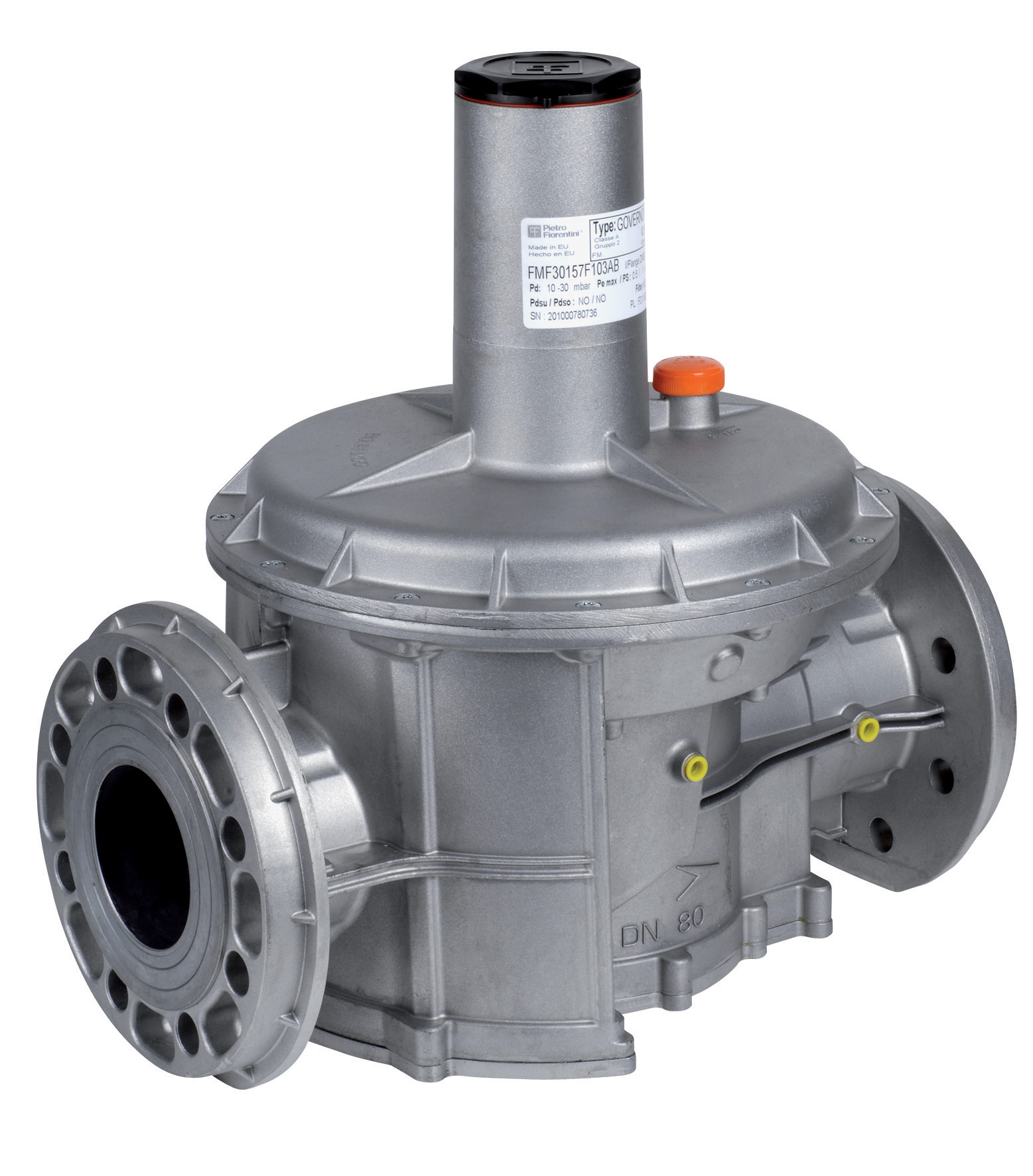
Pressure regulators serve as the primary sizing parameter. The CBM FAG Pressure Regulator with DN50 Flanges (500 mbar inlet, 5–300 mbar outlet) exemplifies a robust self-acting design suitable for medium-capacity boiler systems. Its balanced diaphragm architecture maintains outlet pressure to ±5% across the full flow range, with dual safety diaphragms protecting against rupture scenarios. The larger CBM FAG Pressure Regulator with DN65 Flanges (500 mbar inlet, 5–300 mbar outlet) accommodates higher flow demands for multi-burner or large-capacity catering installations, with identical regulation accuracy and dual-diaphragm safety architecture. Both models comply with EN 12089 (gas equipment standards) and carry CE marking for European Union directive compliance, which Singapore industrial standards recognize as equivalent.
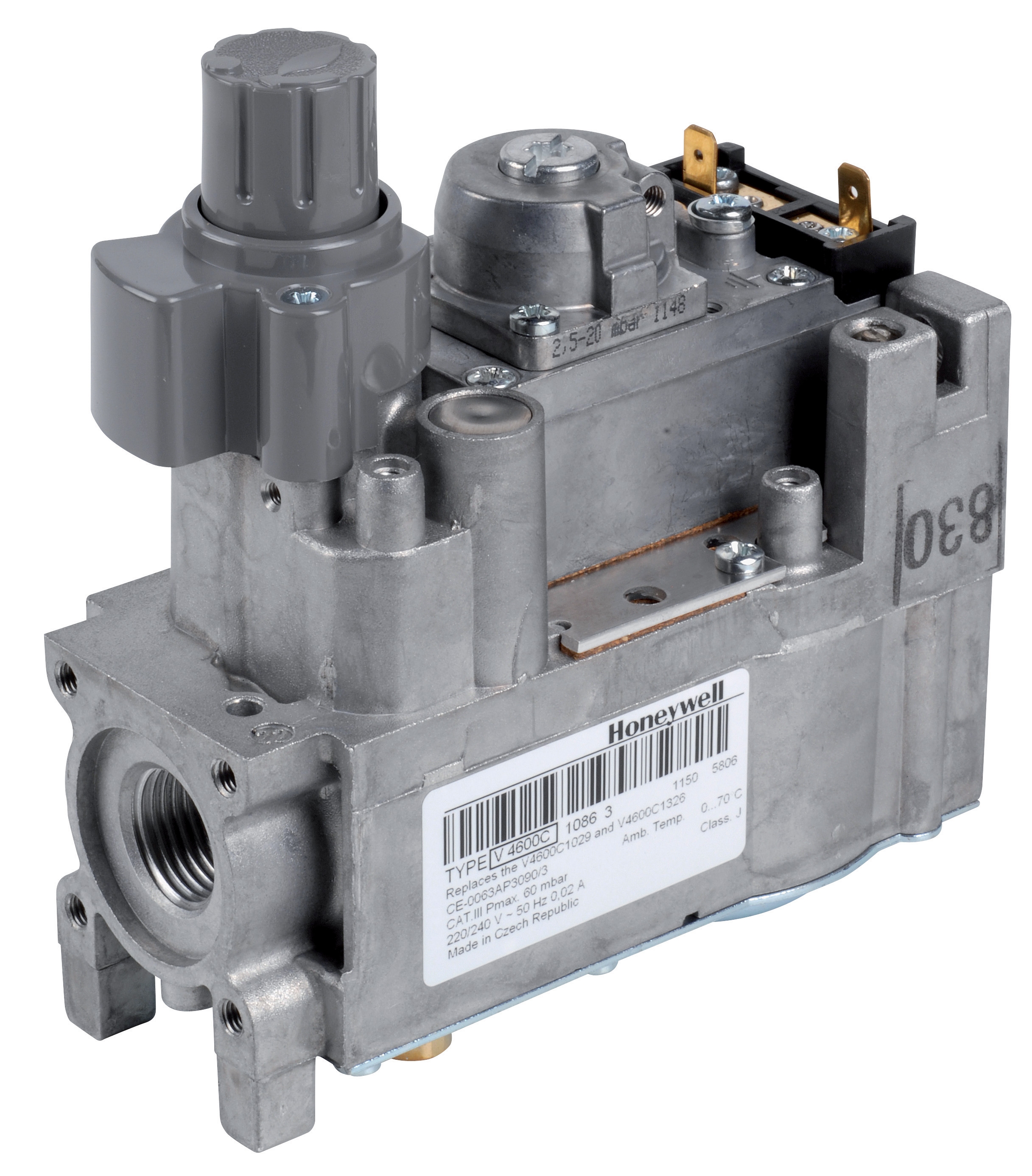
Gas control blocks integrate multiple functions into a single compact unit. The CBM Minisit Multifunctional Gas Control (model 710) represents the industry standard for compact applications, combining pressure regulation, thermoelectric flame supervision, and temperature control in a single body. This design eliminates the piping complexity of separate regulators, solenoid valves, and thermocouples, reducing leak points and installation labor. The Minisit architecture suits stoves, boilers, and small catering equipment with inlet pressures up to 500 mbar and outlet pressure adjustment from 2–15 mbar.
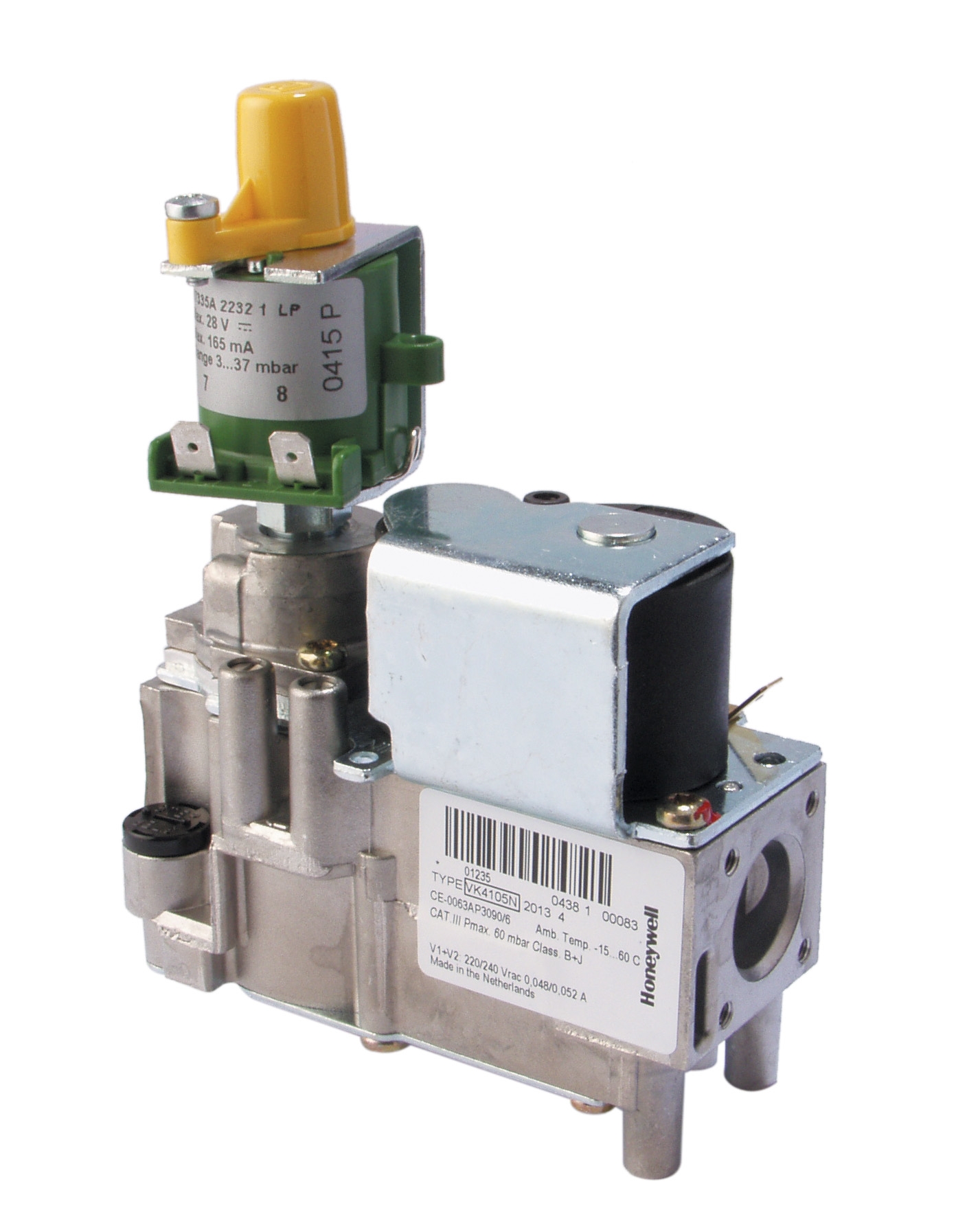
For modulating applications requiring proportional burner response to demand, electronic gas controls such as the CBM VK 4105 N Gas Control with Electric Modulating Pressure Regulator integrate a stepper-motor-driven pressure regulator with microprocessor-based control. This design coordinates with external modulating controls and temperature sensors to vary fuel flow continuously, improving energy efficiency and comfort response in variable-load applications. The VK 4105 N accepts 220–240 Vac supply and modulates outlet pressure from 5–300 mbar proportionally to control signal, with integrated pilot burner connections and safety diagnostics.
Flame supervision components must match the control architecture. The CBM 2-Flame Pilot Burner (model 0160105) and CBM Universal 2-Flame Pilot Light (3 position) feature SIT proprietary combustion technology with corrosion-resistant construction and quick thermocouple replacement design. These pilot burners generate stable, silent flames suitable for continuous supervision duty, with wide turndown range and resistance to abrupt thermal cycling. Paired thermocouples—such as the CBM Thermocouple SIT INT.600 (9×1 mm)—must match the pilot burner model; SIT explicitly recommends using SIT thermocouples exclusively to ensure reliable millivolt generation and solenoid valve actuation.
Safety, Detection, and System Integrity
Gas leak detection represents a critical safety layer, particularly in commercial applications where continuous operation or occupied spaces create exposure risk. Portable detection tools such as the CBM Portable Gas Detector Pen (DTK model) enable rapid field diagnosis, featuring catalytic-bead sensing for combustible gas (methane, propane) with audio and visual alarm output. For permanent system monitoring, the CBM 4-Zone Gas Detection Central Unit integrates up to four remote probes (such as the CBM Butane Probe with Metal Housing IP65) across different building zones, with continuous monitoring, alarm relays, and conformance to electromagnetic compatibility standards (EN 50270:2015) for industrial gas detection environments.
Solenoid isolation valves provide main shutoff capability, either as standalone devices or integrated into control blocks. The CBM Solenoid Valve BC Stainless Steel 3/4" (220V, Viton seals) exemplifies direct-acting design suitable for on-off control, with low power consumption, integrated connectors, and stainless construction for corrosion resistance in demanding environments. Flow capacity ranges from 3/8" through 1.25" ports, accommodating applications from domestic boilers to industrial catering equipment.
Filtration protects downstream regulators and valves from particulate contamination, particularly when systems operate in environments with older supply piping or installations near construction. The CBM Filter Cartridge (10604/5/6 model) offers 100 micron filtration with low pressure drop and simple cartridge replacement, essential for maintaining regulation accuracy over extended service intervals.
Real-World Installation Scenarios in Singapore Commercial Applications
Scenario 1: Commercial Boiler Retrofit with Modulating Control
A 150 kW hot-water boiler system in a Singapore commercial office building requires replacement of an aging non-modulating gas control to improve part-load efficiency and reduce cycling losses. The contractor specifies the CBM VK 4100 D Gas Control with Soft-Lite Opening (220V) paired with external proportional modulating control, a low-pressure CBM FAG DN50 pressure regulator, and permanent gas leak detection with the four-zone detection system. The soft-lite ramp (3–5 second opening) prevents thermal shock to the boiler heat exchanger, while electronic modulation maintains 85% efficiency at 30% load. Installation time reduces by 30% versus separate solenoid, regulator, and supervision components due to integrated design.
Scenario 2: Catering Equipment Gas Control System
A hotel kitchen with multiple gas cooking appliances (wok burners, grills, fryers) requires individual appliance safety controls plus centralized supply management. Each appliance receives a CBM Minisit multifunctional control for thermoelectric supervision and pressure regulation, with pilot light flame monitoring via the 2-flame pilot burner. A master shutoff solenoid downstream of the main pressure regulator enables emergency isolation from the kitchen safety system. The portable gas detector pen performs daily leak checks on all connections.
Scenario 3: Commissioning and Troubleshooting
During system commissioning, flue gas analysis reveals incomplete combustion (high CO levels) indicating pressure misalignment. Using the portable detector and manual gauges, the technician identifies that the outlet pressure from the FAG regulator has drifted 2 mbar above specification due to diaphragm seal wear. The cartridge regulator design enables field replacement without system drain-down, restoring proper stoichiometry within minutes.
Selection Criteria and Installation Best Practices
Specify gas control equipment using a structured selection matrix: (1) determine appliance inlet pressure and burner outlet pressure requirements from equipment manufacturers; (2) calculate peak and part-load gas flow to size regulator capacity; (3) identify connection ports and piping standards (NPT, BSP, or flanged); (4) select voltage availability (24 Vdc if present, else 220–240 Vac); (5) evaluate safety function requirements (thermoelectric, electronic, or modulating); (6) confirm compliance certifications for Singapore industrial standards.
Installation practices should include: (1) installing a filter upstream of the regulator to protect against particulate damage; (2) using piping materials compatible with gas service (copper, stainless, or approved plastics only—never aluminum); (3) performing initial leak testing with soapy water on all connections, then permanent gas detection verification; (4) setting outlet pressure by dead-leg measurement at the burner connection during commissioning; (5) documenting all pressure settings and thermocouple continuity in the maintenance record; (6) scheduling annual thermocouple replacement and filter cartridge changes to prevent age-related failures.
Singapore-specific compliance considerations include recognition of European CE-marked equipment as equivalent to local standards, but always confirm with local gas authorities that specific equipment meets Ministry of Health and Environment guidelines for combustion safety and emissions control.
Conclusion and Next Steps
Gas valve and regulation systems represent mission-critical infrastructure in commercial HVAC applications, where design errors or maintenance lapses directly impact safety, efficiency, and regulatory compliance. Understanding pressure regulation principles, selecting appropriately-sized components for your application, integrating flame supervision and leak detection, and following rigorous installation and commissioning practices are the foundations of reliable operation.
Whether you're specifying equipment for a new installation, retrofitting an existing system, or diagnosing performance issues, the technical depth and practical experience of established equipment distributors can accelerate design decisions and reduce project risk. 3G Electric has served Singapore's industrial equipment market since 1990, with technical expertise in gas control system design, full product inventory, and commissioning support. Contact our technical team to discuss your specific application requirements, request detailed equipment specifications, or arrange on-site consultation for system design and troubleshooting.