Maintenance & Service Equipment Selection: Comparing Pressure Control Systems, Flow Capacity, and Spray Integration for Southeast Asian Plants
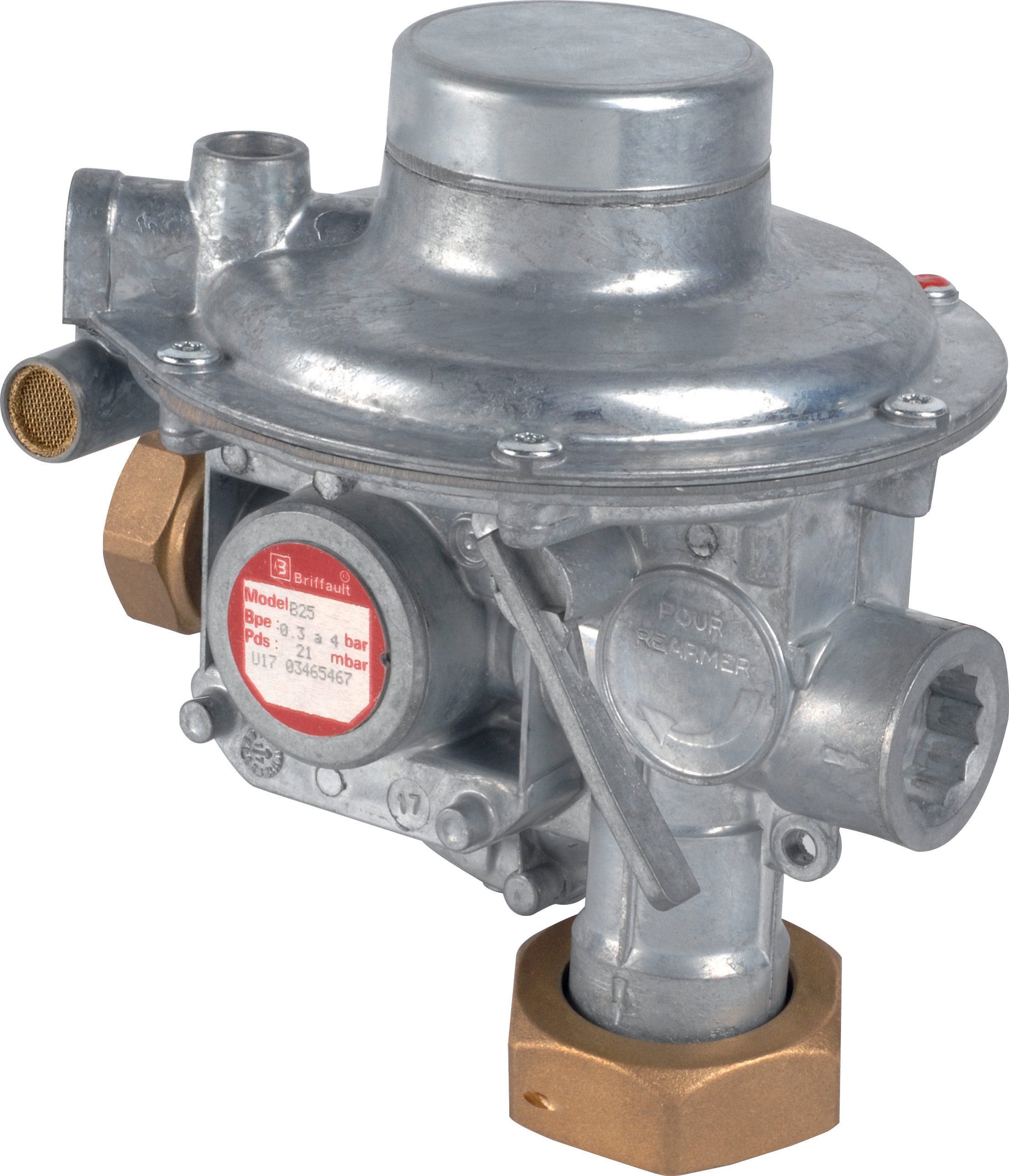
Table of Contentsexpand_more
Understanding Maintenance & Service Component Integration in Southeast Asian Plants
Effective Maintenance & Service strategies require more than reactive repairs. Plant managers across Southeast Asia—from Thailand's automotive suppliers to Indonesia's chemical processors—must select equipment components that work together reliably under harsh operating conditions. Humidity, ambient heat, dust ingestion, and continuous-duty cycles create a maintenance environment unlike temperate-climate facilities.
3G Electric has spent 35 years distributing industrial equipment throughout the region, and we've learned that Southeast Asian plants succeed when they understand how pressure control, pump flow capacity, and spray system precision integrate into a cohesive operational framework. This article compares three critical component categories that define Maintenance & Service effectiveness: pressure regulation safety systems, industrial pump performance classes, and precision spray nozzles for cleaning and coating.
The decision to invest in one component over another affects not just immediate performance, but spare parts availability, technician training, replacement intervals, and total cost of ownership over 5–10 years. Let's examine the practical trade-offs.
Pressure Regulation & Safety: Francel B25/37mb vs. System-Wide Implications
Pressure regulation sits at the foundation of safe Maintenance & Service operations. The Francel B25/37mb pressure regulator with integrated safety relief delivers 37 mbar outlet pressure through a 10 mm vent, making it suitable for laboratory and controlled industrial gas distribution systems.
For plant managers, the critical question isn't just "Does this regulator deliver the right pressure?" but "How does pressure stability affect downstream equipment and maintenance frequency?"
Key Performance Factors:
- Outlet Pressure Consistency (37 mbar): Laboratory-grade regulation ensures that dependent equipment—pumps, spray systems, pneumatic controls—receives stable input. This reduces surges that cause seal degradation and unexpected Maintenance & Service calls.
- Integrated Safety Relief (10 mm vent): Built-in overpressure protection eliminates the need for separate relief valves, reducing connection points, potential leak sites, and overall system complexity. In humid tropical environments, fewer connections mean fewer corrosion points.
- Single-Point Failure Risk: Laboratory-grade regulators are optimized for stable, moderate-flow applications. If your facility requires high-flow gas distribution (>200 L/min), a single B25/37mb regulator becomes a bottleneck requiring multiple units in parallel—adding cost and maintenance burden.
Industrial Pump Selection: Matching Flow and Pressure to Plant Duty Cycles
Industrial pumps define the throughput and reliability of your Maintenance & Service operations, particularly for high-pressure cleaning, fluid transfer, and spray applications. 3G Electric distributes two Pratissoli pump families that serve different operational profiles in Southeast Asia:
The Pratissoli KF30: Mid-Capacity, High-Reliability Option
The Pratissoli KF30 industrial pump (106 L/min, 200 bar, 40 kW) suits plants with moderate continuous demand and limited downtime tolerance.
Specifications and Real-World Implications:
- Flow Rate (106 L/min): Covers single-line spray systems, sequential cleaning stages, and moderate-duty hydraulic circuits. In a typical food-processing facility or beverage bottling line, one KF30 can support two to three independent high-pressure cleaning zones rotating on schedule.
- Pressure (200 bar): Sufficient for surface preparation, scale removal, and standard coating applications. Higher than the Francel regulator's 37 mbar, but below industrial extreme-pressure applications.
- Power Requirement (40 kW): Electric motor or engine coupling. In Southeast Asian facilities with variable grid power, the moderate power draw means easier soft-start compatibility and reduced power factor penalties. At 72 kg, installation in space-constrained facilities is feasible.
- Italian Engineering (Interpump Group): Spare parts availability through distributors like 3G Electric is reliable. Technician familiarity is high across automotive and food-processing sectors in the region.
The Pratissoli MW40: High-Capacity, Multi-Zone Option
The Pratissoli MW40 industrial pump (211 L/min, 210 bar, 85 kW) doubles flow capacity while maintaining pressure, serving larger facilities or multi-zone operations.
Specifications and Real-World Implications:
- Flow Rate (211 L/min): Supports three to five simultaneous cleaning circuits or a single high-volume spray application (e.g., automotive component washing, large-vessel internal cleaning). In a chemical processing plant running parallel extraction lines, one MW40 can supply all zones from a single Maintenance & Service station, reducing equipment redundancy.
- Pressure (210 bar): Marginally higher than KF30 (200 bar), so pressure-dependent equipment (spray nozzles, cleaning heads) can be identical. This simplifies spare parts strategy.
- Power Requirement (85 kW): Roughly 2x the KF30. In facilities with 3-phase power limitations or peak-load management, this necessitates soft-starter investment (₱15,000–25,000) and may trigger demand charges from local utilities during startup surges.
- Weight (264 kg): Installation requires reinforced mounting and dedicated foundation prep, adding one-time site-preparation cost. However, the larger footprint improves oil cooling, extending service intervals.
Decision Framework for Plant Managers: Choose KF30 if your facility has multiple independent cleaning/spray circuits that can operate on rotation. Choose MW40 if you have simultaneous multi-zone demand or plan future expansion.
Spray System Precision: The Euspray Nozzle and System-Level Performance
Spray nozzles are often overlooked in Maintenance & Service planning, yet they directly impact cleaning efficacy, chemical waste, and surface quality.
The Euspray flat jet nozzle (1/4" M BSPT, 25° spray angle, index 30) delivers targeted spray patterns for industrial cleaning and coating applications.
Spray Pattern Characteristics:
- Flat Jet Design: Produces a rectangular spray fan rather than circular mist. For cleaning, this concentrates pressure into a linear contact zone, removing stubborn contaminants with less chemical volume. For coating, it provides uniform application width with minimal overspray—critical in high-humidity environments where drift and redeposition reduce finish quality.
- 25° Spray Angle: A moderate angle balancing coverage width and impact intensity. Narrower angles (15°) concentrate force but require more lateral passes; wider angles (45°) increase coverage but reduce impact pressure. At 25°, you achieve ~80% of theoretical impact pressure while covering a 30–40 cm wide band at 30 cm stand-off distance.
- 1/4" M BSPT Connection: Compatible with standard manifold ports and hose couplers used across Southeast Asian industrial equipment. This reduces the risk of obsolete fittings when sourcing replacements through 3G Electric or local suppliers.
- Index 30 Design: The "index" number refers to calibration spacing on multi-nozzle boom headers. Index 30 means nozzles are spaced 30 mm apart, allowing modular boom assembly. If you're upgrading from a 3-nozzle to a 5-nozzle boom, you simply add two additional nozzles without re-engineering piping.
Integrating Components into a Cohesive Maintenance & Service Strategy
Selecting individual components is insufficient. Plant managers must consider how these three categories interact:
Scenario 1: Food & Beverage Bottling Facility (Thailand)
- Pressure Regulator: Francel B25/37mb (for clean gas supply to pneumatic actuators)
- Pump: Pratissoli KF30 (106 L/min accommodates two parallel CIP (Clean-in-Place) circuits)
- Spray Nozzles: Two Euspray flat jets on rotating header (25° angle ensures bottle exterior cleaning without splashing into interior)
- Maintenance Schedule: Nozzle flushing monthly, pump seal inspection quarterly, regulator vent filter change semi-annually
- Annual Cost: ₱180,000–220,000 in spare parts and labor
- Pressure Regulator: Francel B25/37mb (for brake-off circuit safety)
- Pump: Pratissoli MW40 (211 L/min supports three parallel degreasing + spray-rinse zones)
- Spray Nozzles: Five Euspray flat jets on indexed boom (35 mm spacing = 175 mm total coverage width)
- Maintenance Schedule: Nozzle flushing every 2 weeks (due to high dust environment), pump seal inspection monthly, pressure regulator vent filter change quarterly
- Annual Cost: ₱320,000–380,000 in spare parts and labor
- Pressure Regulator: Francel B25/37mb (upstream of pump to stabilize inlet pressure)
- Pump: Interpump E1D1808 (8 L/min, 180 bar) for low-volume precision circuits; MW40 as primary high-volume pump
- Spray Nozzles: Specialized coating nozzles (different from flat jets) for chemical application
- Maintenance Schedule: Pump seal inspection every 500 operating hours, nozzle replacement every 1,500 hours (chemical erosion), regulator check annually
- Annual Cost: ₱250,000–310,000
The Interpump E1D1808 compact gear pump (8 L/min, 180 bar, 2.72 kW) deserves mention as a supplementary option for precision applications. At 5 kg and low power input, it's ideal for secondary circuits or as a backup pump in larger facilities, ensuring that a single Maintenance & Service failure doesn't halt production.
Practical Procurement and Long-Term Value
When evaluating Maintenance & Service equipment, plant managers should assess:
1. Total Cost of Ownership (TCO): Component cost is 20–30% of TCO; spare parts, labor, and downtime dominate. A slightly more expensive pump with 20% longer service life often saves money over 5 years.
2. Local Spare Parts Availability: 3G Electric's 35+ years in industrial distribution means we maintain stock of Pratissoli, Francel, and Euspray components across Southeast Asia. Verify that your equipment choice aligns with distributor networks in your country.
3. Technician Familiarity: Italian-engineered Pratissoli pumps are common in automotive and food sectors; your maintenance team likely has experience. Choosing less-familiar brands requires training investment.
4. Upgrade Path: If you select index 30 nozzles and KF30 pump now, moving to MW40 and additional nozzles later uses the same connectivity standards, reducing re-piping costs.
5. Environmental Conditions: Southeast Asian humidity demands corrosion-resistant coatings on stainless steel fasteners. Verify that quoted equipment includes tropical-grade finishes, not standard temperate-climate versions.
Conclusion
Maintenance & Service equipment selection in Southeast Asia requires balancing immediate operational needs, regional availability, technician expertise, and multi-year cost projections. By comparing the Francel B25/37mb pressure regulator, Pratissoli KF30 and MW40 pumps, and Euspray flat jet nozzles across typical facility scenarios, plant managers can make informed decisions aligned with their production profile and budget.
3G Electric's experience across 35+ years and multiple Southeast Asian markets positions us to support your selection process, source equipment reliably, and provide technical guidance on integration and maintenance planning. Contact your local 3G Electric office to discuss your facility's specific Maintenance & Service requirements.