Maintenance & Service Planning for Industrial Fluid Systems: Component Lifecycle Management and Cost Optimization Strategies
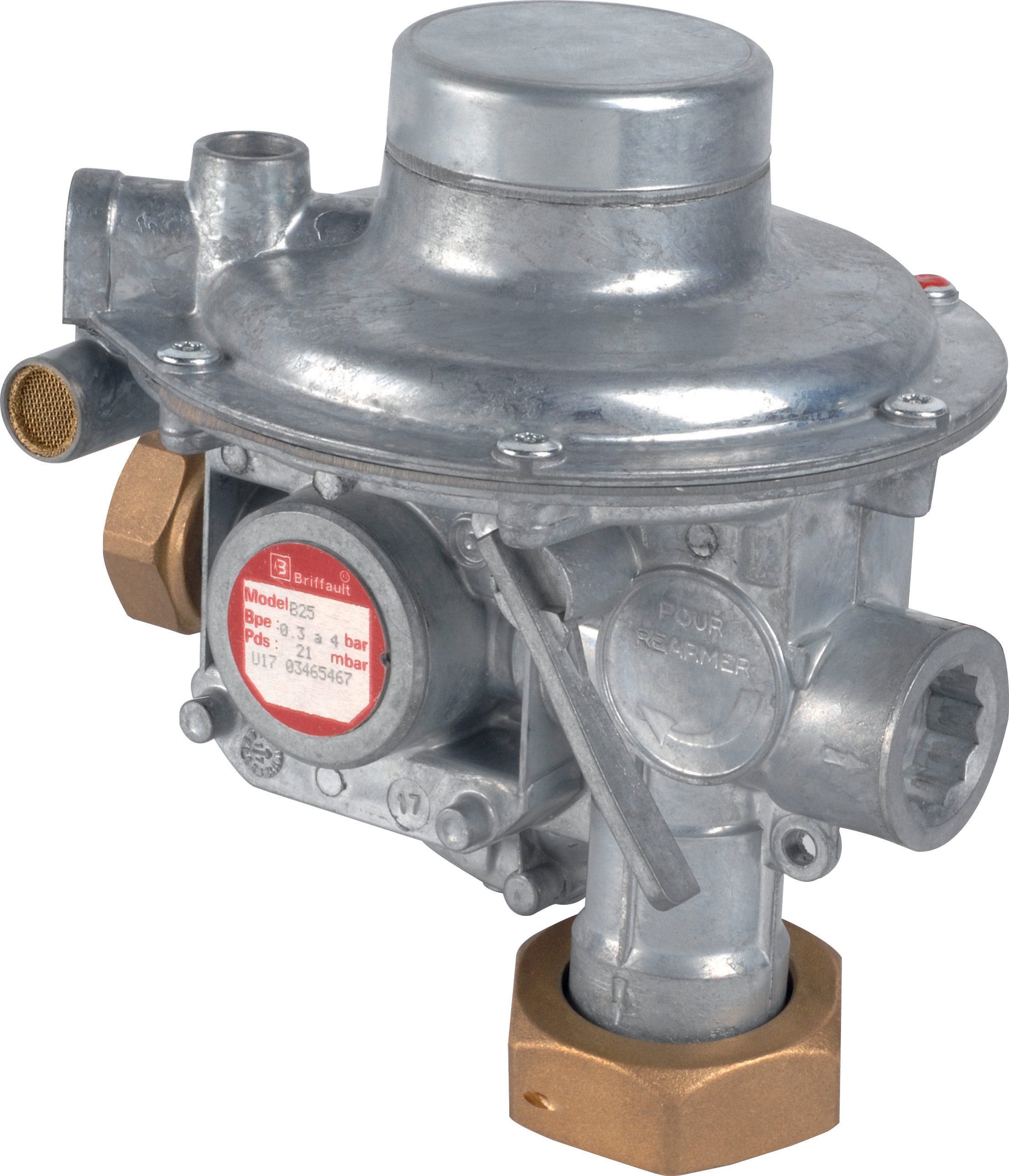
Table of Contentsexpand_more
Understanding Total Cost of Ownership Through Maintenance & Service Strategy
Procurement engineers recognize that equipment acquisition cost represents only 20-30% of total lifecycle expenditure. Maintenance & Service costs—including scheduled downtime, parts replacement, and labor—consume the remaining 70-80%. With 35+ years of experience distributing industrial equipment, 3G Electric has observed that organizations applying structured maintenance protocols reduce unplanned downtime by 40-60% and extend component lifespans by 25-35%.
For fluid power systems in Singapore's manufacturing environment, humidity, thermal cycling, and vibration acceleration create unique maintenance challenges. The industrial pumps supplied by 3G Electric, including Pratissoli KF30 series (106 L/min, 200 bar) and Pratissoli MW40 series (211 L/min, 210 bar), demand preventive intervention points that must align with production scheduling and inventory planning.
Proactive Maintenance & Service planning begins during procurement phase, not after equipment failure occurs. Procurement engineers should establish baseline maintenance requirements before purchase authorization, ensuring spare parts availability, technician training timelines, and service contracts align with operational demands.
Maintenance & Service Intervals for High-Pressure Industrial Pumps
Initial Run-In Period (0-200 Operating Hours)
New industrial pumps require accelerated monitoring during commissioning. The Interpump PUMP E1D1808 L (8 L/min, 180 bar, 2.72 kW) and larger displacement units must be evaluated for:
- Pressure stabilization: Outlet pressure should stabilize within ±2 bar of rated specification within first 50 hours. Fluctuations exceeding ±5 bar indicate internal component seating issues requiring immediate manufacturer consultation.
- Temperature profiling: Fluid temperature rise should not exceed 8-10°C above ambient during the first 100 hours. Higher rise rates suggest internal friction losses or inadequate cooling capacity.
- Noise signature: Establish baseline operating noise (typically 75-82 dB for mid-range displacement pumps). Increasing cavitation noise indicates suction-side restrictions or fluid viscosity incompatibility.
- Flow rate verification: Conduct actual flow measurement at system operating pressure. Deviation >3% from rated displacement indicates manufacturing variance or internal wear beginning prematurely.
Maintenance & Service schedules should mandate oil sampling at 50-hour, 150-hour, and 200-hour intervals to establish wear rate baselines. Iron content, viscosity, and water contamination analysis guide subsequent service intervals.
Routine Operational Maintenance (200-2000 Hours)
Once pumps transition to steady-state operation, Maintenance & Service intervals follow ISO 4413 guidelines adapted for tropical climates:
- Oil change cycles: Standard interval 500-750 operating hours for ISO VG 46 hydraulic fluid in controlled environments; reduce to 250-350 hours in high-humidity manufacturing facilities where moisture ingress accelerates oxidation.
- Filter element replacement: Main system filter every 250-500 hours; suction strainer every 1000 hours minimum. Replacement frequency increases dramatically if baseline oil analysis reveals elevated iron content (>200 ppm) indicating accelerated internal wear.
- Seal and coupling inspection: Visual inspection every 250 hours; detailed assessment every 500 hours. Look for:
- Coupling alignment drift >0.5 mm radial or >0.3° angular: requires realignment to prevent premature bearing failure
- Bearing temperature elevation >15°C above normal: signals lubrication degradation or mechanical friction increase
- Pressure relief valve function verification: Test via manual pressure bleed-down quarterly. Response time should remain <100 ms; slower response indicates spool stiction requiring disassembly cleaning or cartridge replacement.
Extended Service Life Optimization (2000-8000 Hours)
Pumps operating beyond 2000 hours enter wear-rate stabilization phase where Maintenance & Service becomes predictive rather than calendar-based. Organizations using KF30 and MW40 series pumps should implement:
- Condition monitoring via tribology: Oil analysis shifts to every 200 operating hours or quarterly (whichever occurs first). Track wear metal trends (iron, copper, aluminum) to establish failure prediction curves.
- Vibration analysis baseline: Establish accelerometer readings at system pressure, idle, and load conditions. Increasing high-frequency content (>5 kHz) signals bearing degradation 200-400 hours before catastrophic failure.
- Thermal imaging: Monthly IR camera surveys of pump housing, motor coupling, and return line temperatures. Localized hotspots >5°C above surrounding areas indicate internal leakage paths or mechanical friction concentration.
Maintenance & Service for Pressure Regulation and Safety Components
Pressure regulators such as Francel B25/37mb (37 mbar outlet, 10 mm vent) require distinct Maintenance & Service protocols because regulator failure modes differ fundamentally from pumps—regulators fail through blockage, drift, or safety element corrosion rather than mechanical wear.
Gas Regulator Maintenance Intervals
Monthly inspections (operational systems):
- Outlet pressure verification: Use calibrated analog gauge accurate to ±0.5 mbar. Document readings; drift >±2 mbar from setpoint indicates internal spool wear or contamination.
- Vent path inspection: Confirm 10 mm vent remains clear. Blockage causes backpressure that falsifies outlet pressure readings and prevents safety relief operation.
- Inlet connection tightness: Check all NPT/BSPT fittings with appropriate wrench size (overtightening damages seals; undertightening causes creep).
- Inlet filter element replacement: Regulator inlet filters protect against particulate that accelerates poppet wear. Replace when differential pressure exceeds 0.5 bar.
- Safety relief verification: Manually lift relief poppet to confirm free movement without resistance. Stiction indicates contamination requiring cartridge service or replacement.
- Corrosion assessment: For systems using oxygen or specialty gases, inspect for surface oxidation indicating internal corrosion. This accelerates both setpoint drift and safety element unreliability.
- Regulator cartridge replacement (if facility operates continuously): Preventive replacement of poppet assembly, seals, and springs ensures <0.5 mbar drift specification compliance. Cost of cartridge replacement (typically $150-300) versus emergency downtime justifies annual preventive replacement for critical applications.
- Inlet/outlet pressure gauge replacement: Mechanical gauges lose accuracy 5-8% annually under vibration; replace on 12-month schedule in vibration-intensive environments.
- Full pressure test certification: Annual third-party pressure testing to 1.5× rated setpoint ensures safety compliance and provides liability documentation.
Maintenance & Service for Spray System Components
Spray nozzles including Euspray flat jet nozzle HP 1/4" M BSPT operate in chemically aggressive, vibration-intensive environments requiring specialized Maintenance & Service protocols.
Nozzle Performance Degradation and Replacement Triggers
Unlike pumps where gradual efficiency decline is acceptable, spray nozzle performance degradation creates immediate product quality failure. Maintenance & Service must recognize three critical thresholds:
Spray pattern drift: When measured spray angle deviates >2° from specification (25° nominal for TEC02064 = acceptable range 23-27°), pattern concentration shifts causing coverage gaps. Nozzles requiring >10% pressure increase to restore atomization should be replaced immediately.
Orifice erosion: Flat jet nozzles experience erosion acceleration beyond 200 bar operating pressure, particularly with abrasive fluids or slurries. Maintenance & Service intervals should halve when operating above 80% of maximum pressure rating:
- Standard duty (clean fluids, <150 bar): 500-750 operating hours
- High duty (abrasive particulates, >150 bar): 250-350 operating hours
Preventive Nozzle Inventory Strategy
Spray nozzles represent low-cost, high-impact consumables. 3G Electric recommends maintaining spare inventory equal to 25% of total nozzles installed, enabling rapid replacement and reducing production downtime. For applications using Euspray nozzles, implement:
- Batch replacement cycles: Replace all nozzles in a manifold/header simultaneously rather than individually. This prevents spray pattern inconsistencies across product width and ensures uniform application quality.
- Performance baseline documentation: Record spray pattern image, outlet pressure, and flow rate at installation. Compare monthly against baseline; deviation >5% triggers replacement despite apparent normal operation.
- Cross-compatibility verification: Confirm replacement nozzles match index specification (Index 30 for TEC02064). Index misalignment creates 5-8° spray angle variation invisible until product defects appear downstream.
Maintenance & Service Documentation and Procurement Integration
Structured Maintenance & Service records serve dual purposes: immediate operational diagnostics and long-term procurement intelligence informing future equipment selection.
Procurement engineers should require equipment suppliers—including 3G Electric as distributor—to provide:
1. Maintenance schedule templates documenting intervals, acceptance criteria, and component lifecycle expectations. These become operational procedure baselines rather than generic manufacturer manuals.
2. Spare parts lists with shelf life requirements, enabling procurement to establish inventory that doesn't expire before use while maintaining critical spares availability.
3. Failure mode reference documentation helping technicians distinguish routine maintenance from emergency repairs requiring alternate products or sourcing approaches.
4. Service provider networks in Singapore region, ensuring local expertise for complex maintenance (regulator cartridge service, pump overhauls) reduces logistics delays and enables rapid deployment when failures occur.
With 35+ years of Singapore industrial equipment distribution, 3G Electric maintains relationships with service providers and authorized repair facilities throughout the region, supporting Maintenance & Service continuity beyond initial equipment supply.