Comprehensive Guide to Burners & Combustion: Selection, Specifications & Applications for Singapore Industries
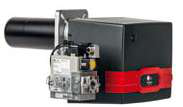
Table of Contentsexpand_more
Comprehensive Guide to Burners & Combustion: Selection, Specifications & Applications for Singapore Industries
The combustion industry in Singapore faces increasingly stringent efficiency and compliance requirements across manufacturing, chemical processing, and industrial heating applications. Understanding burner technology and combustion principles is essential for facility managers and engineers tasked with selecting, maintaining, and optimizing heating systems. This comprehensive guide examines gas burner architectures, performance specifications, and practical selection methodologies to help industrial professionals make data-driven decisions. Whether you're upgrading existing equipment or specifying new installations, understanding the technical landscape of burners and combustion systems directly impacts operational efficiency, regulatory compliance, and long-term capital expenditure.
Understanding Burner Technology and Combustion Fundamentals
Modern industrial gas burners represent the convergence of mechanical engineering, fluid dynamics, and electronic control systems. At their core, burners accomplish a singular but critical function: the precise mixing and ignition of fuel and air to produce controlled thermal energy. The combustion process itself follows fundamental chemical principles, but industrial implementation requires sophisticated control mechanisms to maintain efficiency across varying load conditions.
Gas burners operate across two primary configurations: atmospheric burners and forced-air (power) burners. Atmospheric burners rely on natural draft and the Venturi effect to introduce combustion air, making them simpler but less controllable. Power burners employ electric motors to force air through the combustion chamber, enabling precise air-fuel ratio management and significantly better turndown ratios—the capability to operate efficiently across a wide range of output levels. This distinction matters considerably in industrial applications where load variation is commonplace.
The electronic control layer has become increasingly important in modern burner design. Contemporary systems incorporate flame detection (via ionization electrodes, ultraviolet cells, or infrared detectors), automated air-fuel ratio adjustment, and safety interlocks that prevent unsafe operating conditions. These controls ensure repeatable performance, reduce emissions, and protect equipment integrity. For Singapore's manufacturing sector, where environmental compliance and operational reliability are paramount, understanding these control mechanisms is non-negotiable.
The nozzle design and fuel atomization pattern directly influence combustion efficiency and flame stability. Nozzle specifications—measured in millimeters and rated by pressure drop and flow capacity—determine the fineness of fuel atomization and the spray pattern that enters the combustion chamber. Well-designed nozzle geometry promotes rapid mixing with combustion air, reducing unburned fuel losses and minimizing flame length, which is critical when space constraints limit combustion chamber dimensions.
Technical Specifications and Performance Characteristics of Industrial Gas Burners
When evaluating gas burner systems for industrial applications, engineers must analyze several interconnected performance parameters. Power output—measured in kilowatts—represents the thermal energy the burner can deliver, while turndown ratio indicates the minimum-to-maximum load range over which the burner maintains stable combustion and acceptable efficiency. Modern industrial burners typically achieve turndown ratios between 4:1 and 10:1, meaning they can operate from 10% to 100% of rated capacity while maintaining combustion stability.
The FBR X GAS XP 60 CE TC EVO (_41) exemplifies mid-range industrial burner architecture. This unit features a 250 mm nozzle configuration, capable of delivering between 232 kW minimum and 630 kW maximum output—a 2.7:1 turndown ratio suitable for applications requiring moderate load variation. The three-phase electrical supply requirement indicates this burner incorporates electronic modulation capabilities and motor-driven fan controls, enabling precision air-fuel ratio management across the operating range.
For higher-capacity applications demanding greater thermal output, the FBR GAS XP 80/2 CE-LX4 TL Cl. 4 (_41) represents advanced industrial-grade design. With a 385 mm nozzle and power rating from 170 kW to 850 kW, this burner delivers nearly three times the capacity of the XP 60 model while maintaining a 5:1 turndown ratio. The LX4 classification indicates enhanced flame detection reliability, critical in mission-critical applications where unexpected flame-out could compromise process integrity. The three-phase electrical supply enables sophisticated combustion control.
The FBR GAS X2/M CE-LX4 TC Cl. 4 (_31) addresses the opposite end of the capacity spectrum. Featuring a compact 90 mm nozzle with 23.7–93 kW output range, this burner serves smaller heating loads, space-constrained installations, and modular combustion systems. The single-phase electrical supply simplifies installation in facilities without three-phase power infrastructure. Despite its smaller scale, the CE-LX4 TC designation indicates it meets contemporary European combustion equipment standards, ensuring regulatory alignment for Singapore-based operations.
For applications requiring even tighter control and extended turndown capability, the FBR GAS X2/M CE TC (_31) offers similar dimensional specifications (90 mm nozzle) but with a different control architecture. Rated 17.4–93 kW, this variant provides greater minimum-load capability, important in processes where frequent partial-load operation occurs. The single-phase supply maintains the simplicity advantage while the TC designation confirms thermal combustion control compliance.
The relationship between nozzle diameter, power output, and electrical supply reflects fundamental design trade-offs. Larger nozzles accommodate greater fuel flow, enabling higher power output, but require more robust air supply systems and typically demand three-phase electrical infrastructure. Single-phase units like the X2/M series suit smaller facilities but accept corresponding capacity limitations. Understanding these constraints prevents over-specification (which increases capital and operating costs) and under-specification (which compromises process capability).
Real-World Applications and Combustion System Integration
Singapore's diverse industrial base presents varied combustion requirements across distinct applications. In food processing facilities, where large steam generators drive batch cooking and sterilization, mid-to-large capacity burners like the FBR GAS XP 80 series maintain consistent thermal output across fluctuating production schedules. The LX4 flame detection ensures immediate shutdown if combustion instability develops, preventing product spoilage or equipment damage.
Chemical manufacturing operations frequently employ modular combustion systems combining multiple smaller burners rather than single large units. This architecture provides redundancy—if one burner experiences technical issues, others maintain partial output—and enables precise load matching through sequential burner activation. The compact FBR GAS X2/M series burners excel in this application, allowing installation of multiple units on a common gas train while maintaining individual flame detection and safety controls.
Metal treatment and heat-treating operations demand sustained high-temperature combustion with exceptional flame stability. The FBR GAS XP 80/2 and XP 80/M variants, both rated to 850 kW, provide the sustained thermal output necessary for furnace operation while their advanced flame detection systems (LX4 classification) ensure safe, reliable performance even in high-vibration environments typical of metal processing facilities.
In facilities transitioning to automation and Industry 4.0 architectures, burner electronic control systems become integration points for broader facility management systems. Modern burners incorporate diagnostics and remote monitoring capabilities that feed into building management systems, enabling predictive maintenance and detailed energy auditing—increasingly important for Singapore's industrial sector as energy efficiency initiatives gain regulatory prominence.
Selection Criteria and Best Practices for Burner Specification
Selecting appropriate burner equipment requires systematic evaluation across multiple technical and operational dimensions. Begin by establishing genuine thermal load requirements, accounting for peak demand, average operating load, and anticipated future process changes. Over-sizing burners increases acquisition costs and operates inefficiently at part-load conditions; under-sizing limits production capability and creates safety risks from sustained operation at excessive output levels.
Evaluate turndown requirements carefully. If your process operates primarily at 80–100% of maximum output, a burner with 5:1 turndown provides adequate flexibility. Conversely, processes with frequent setpoint variations demand burners offering 8:1 or greater turndown to maintain combustion efficiency across the operating range. The specification data reveals this directly: comparing the FBR X GAS XP 60's 2.7:1 ratio against the XP 80/2's 5:1 ratio illustrates how nozzle design and motor control sophistication directly enable superior load matching capability.
Electrical infrastructure compatibility requires early assessment. Three-phase power enables advanced combustion control and superior turndown but requires appropriate facility infrastructure. Single-phase applications like the FBR GAS X2/M series eliminate this complexity for smaller installations. Consult your facility's electrical systems early in the specification process.
Compliance verification is non-negotiable. Ensure specified burners meet relevant standards—in Singapore, this includes compliance with relevant PSB (Professional Engineers Board) guidelines and environmental regulations. The CE and TC designations on FBR equipment indicate alignment with European combustion equipment standards, providing assurance of design rigor and safety protocols. Verify alignment with your facility's specific regulatory environment and insurance requirements.
Integration with supporting equipment—gas trains, control modules, and flame detection systems—must be planned holistically. The CBM control relay systems (TMG 740-3, GR2) provide the intelligent switching and safety interlocks that transform standalone burners into complete combustion systems. Working with experienced distributors like 3G Electric ensures compatibility across all system components and proper commissioning.
Conclusion and Next Steps
Gas burner selection represents a critical decision point in industrial facility design and upgrade projects. The technical landscape—encompassing power output, turndown capability, control architecture, and regulatory compliance—contains multiple trade-offs requiring careful analysis specific to your operational requirements. The range of industrial gas burners available through 3G Electric, from the compact FBR GAS X2/M series through the high-capacity FBR GAS XP 80 variants, provides solutions spanning virtually all Singapore industrial applications. Whether you're optimizing an existing heating system or designing new combustion infrastructure, understanding these technical foundations enables informed decision-making that delivers efficiency, reliability, and regulatory compliance. Contact the 3G Electric team to discuss your specific combustion requirements—our industrial equipment specialists are ready to guide you toward optimal burner specification and integration with supporting control systems.
![Gas Burner Types SG | Selection Guide [2026]](https://oxalncjenpflyqfncuhe.supabase.co/storage/v1/object/public/product-assets/products/907afddd-f10f-4f84-8526-06f1efc8daa0/002449_41.png)