Burners & Combustion Equipment Specifications: Matching Thermal Capacity to Singapore HVAC System Requirements
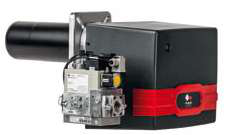
Table of Contentsexpand_more
Understanding Thermal Capacity Requirements for Burners & Combustion Systems
When evaluating Burners & Combustion equipment for Singapore's tropical industrial environment, thermal output capacity is often the overlooked decision factor. HVAC contractors frequently focus on control features and safety compliance—essential, but incomplete. Your heating system's actual performance depends on selecting equipment whose thermal rating aligns with your facility's maximum demand plus seasonal variation.
Thermal capacity is measured in kilowatts (kW) for gas systems or megacalories per hour (Mcal/h) for dual-fuel applications. Singapore's year-round warm climate creates different heating demands than temperate regions. Manufacturing processes requiring precise temperature control—pharmaceutical production, food processing, textile dyeing—demand burners with exact capacity matching, not oversized equipment.
Oversizing burner capacity creates three operational problems: increased cycling losses, poor part-load efficiency, and difficulty maintaining stable flame conditions at low modulation. Undersizing forces constant high-fire operation, accelerating component wear and voiding warranty coverage. With 35+ years of industrial equipment distribution experience, 3G Electric has observed that correct capacity matching improves system efficiency by 12-18% compared to poorly sized installations.
Comparing Gas Burner Specifications: Single-Stage vs. Modulating Output
The FBR GAS XP 60/2 CE TC EVO represents modern two-stage gas burner technology, delivering 116–630 kW thermal power through high-low firing and modulating control. For Singapore HVAC contractors managing chiller plants, district heating loops, or process heating in industrial facilities, this 514 kW capacity range addresses light-duty through medium-load applications.
Key specifications for gas burner selection:
- Thermal power range: 116–630 kW (FBR GAS XP 60/2)
- Modulation capability: Maintains stable flame across 20-100% load
- Nozzle size: 250 mm standard (affects fuel atomization quality)
- Noise level: 66–69 dBA (IP 40 protection rating)
- Flame monitoring: Compatible with UV flame detection systems
The two-stage design allows full turndown to 20% capacity, reducing cycling losses during partial-load operation typical in Singapore's industrial sector. Oil temperature variations—critical in tropical climates where ambient cooling effectiveness diminishes—are managed through internal pressure compensation on modulating burners.
For contractors evaluating control unit compatibility, the Siemens Relay LFL 1.622 provides integrated flame monitoring via UV and ionization detection, ideal for gas burners requiring medium-to-high power ratings. This control unit reduces auxiliary component requirements, simplifying system architecture and reducing troubleshooting complexity.
Heavy Oil Burner Capacity: Understanding Dual-Fuel Thermal Output
Singapore's industrial base frequently operates dual-fuel systems—gas during normal operation, oil backup during supply disruptions. The FBR KN 1300/M TL EL represents high-capacity heavy oil burner technology, delivering 1700–11,500 Mcal/h (1,980–13,370 kW equivalent) with two-stage modulating control.
This capacity range addresses large industrial applications: central heating plants, district energy systems, and manufacturing facilities with significant thermal loads. The thermal output specification differences between the FBR GAS XP 60/2 (630 kW maximum) and FBR KN 1300/M (13,370 kW maximum) highlight the importance of accurate load calculation before equipment selection.
Thermal capacity comparison for Singapore facilities:
- Small HVAC systems (office buildings, light industrial): 100–300 kW gas burners
- Medium industrial processes (food, pharmaceutical manufacturing): 300–1,000 kW dual-stage gas
- Large district heating or process plants: 1,700–11,500 kW oil or dual-fuel systems
- Critical backup applications: Dual-fuel systems with proven oil ignition reliability
Heavy oil burners require precise atomization control to prevent combustion instability. The FBR KN 1300/M operates with air-assisted heavy oil (2E heavy oil grade), common in Singapore due to local refinery output. Thermal output directly impacts fuel nozzle selection, pressure settings, and air damper positioning. Incorrect capacity specification often results in contractors oversizing oil nozzles, creating rich combustion, incomplete fuel atomization, and excessive particulate emissions—particularly problematic under Singapore's tightening emissions regulations.
Burner Control Integration: Matching Safety Relays to Thermal Capacity
Burner control system architecture must match the thermal capacity of connected combustion equipment. The Kromschroder Relay BCU 570WC1F1U0K1-E supports direct ignition and intermittent/continuous pilot modes, compliant with EN 746-2 and EN 676 standards. This control relay integrates pressure monitoring, flame detection, and ignition sequencing—critical for systems operating continuously at varying loads.
The Kromschroder Pressure Switch DG 50U/6 provides SIL 3 safety-rated pressure monitoring, essential for burner systems where fuel supply pressure variation could affect thermal output stability. In tropical environments, fuel oil viscosity changes significantly with ambient temperature. A pressure switch rated SIL 3 and Performance Level e (meeting EN 1854, FM, UL, AGA, and GOST-TR certifications) ensures ignition reliability across Singapore's 24–32°C ambient temperature range.
Critical control specification requirements:
- Safety integrity level: SIL 3 minimum for industrial applications
- Flame detection type: UV preferred for oil burners, ionization acceptable for gas
- Pilot ignition mode: Intermittent for energy efficiency, continuous for high-cycle applications
- Pressure monitoring range: Must accommodate fuel supply variation (±10% acceptable)
- Air damper control: Required for modulating burners to maintain combustion stability
Contractors frequently make control selection errors by choosing relay units without considering the thermal capacity they're protecting. A SIL 3 control unit protecting a 630 kW gas burner faces different failure modes than the same unit protecting an 11,500 Mcal/h oil system. High-capacity burners demand faster response times, tighter pressure tolerances, and more sophisticated flame detection because thermal energy release rates are significantly higher.
Practical Capacity Matching for Singapore HVAC Contractors
Successful burner system installation requires matching four interdependent specifications: thermal capacity, fuel type, control system safety rating, and modulation range. Singapore's industrial environment—high ambient temperatures, humidity-driven corrosion, and stringent emissions standards—demands conservative equipment selection with proven reliability.
Decision framework for capacity selection:
1. Calculate facility heating load: Peak demand plus 15% safety margin, accounting for seasonal variation (minimal in Singapore but important for manufacturing process stability)
2. Determine fuel availability: Natural gas availability and pressure stability vs. dual-fuel necessity for supply reliability
3. Specify modulation requirements: Single-stage for constant-load applications, two-stage for variable 20-100% turndown, proportional modulating for precision process heating
4. Select control system safety rating: SIL 2 minimum for small systems, SIL 3 for critical applications, with flame detection redundancy for high-capacity burners
5. Verify component compatibility: Ensure pressure switches, flame detectors, and air damper actuators match burner thermal output specifications
With 35+ years of industrial equipment distribution experience, 3G Electric recommends consulting thermal load calculations from your HVAC engineer before finalizing burner specifications. The cost of undersized equipment replacement far exceeds the investment in accurate capacity analysis. Oversized systems create efficiency losses that compound over facility lifetime, typically exceeding burner cost 3-5 times through operational waste.
Singapore's competitive industrial environment requires HVAC systems operating at peak efficiency. Correct thermal capacity matching, combined with proper control system integration and regular maintenance, delivers the reliability and cost performance your facility requires.
![Gas Burner Types SG | Selection Guide [2026]](https://oxalncjenpflyqfncuhe.supabase.co/storage/v1/object/public/product-assets/products/907afddd-f10f-4f84-8526-06f1efc8daa0/002449_41.png)