Gas Burner Selection Guide for Industrial Applications in Singapore: Matching Power Requirements to Equipment
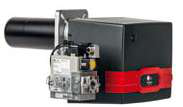
Table of Contentsexpand_more
Gas Burner Selection Guide for Industrial Applications in Singapore: Matching Power Requirements to Equipment
Selecting the appropriate gas burner for your industrial combustion system is a critical decision that directly impacts operational efficiency, safety, and equipment longevity. In Singapore's demanding industrial environment, where precision manufacturing, food processing, and chemical production require consistent thermal performance, the specifications of your burner unit can mean the difference between optimal productivity and costly downtime. This guide provides industrial professionals with the technical framework needed to evaluate gas burner options, understand key performance metrics, and match burner capabilities to specific application requirements. Whether you operate a small batch process requiring modest thermal input or a large-scale operation demanding 850 kW of continuous power, understanding burner specifications—including nozzle diameter, power range, electrical supply requirements, and combustion control features—is essential for informed procurement decisions.
Understanding Gas Burner Core Specifications and Performance Parameters
Gas burners operate on fundamental combustion principles: controlled mixing of gaseous fuel with air, ignition, and flame stabilization within a combustion chamber. The performance characteristics of any industrial gas burner are defined by several critical technical parameters that determine its suitability for specific applications.
Power Rating (kW) represents the thermal energy output of the burner and is expressed as both minimum and maximum values. The minimum power rating indicates the lowest stable combustion level the burner can maintain, while the maximum power rating indicates its peak thermal output capacity. This range is crucial because most industrial processes operate across varying load conditions. A burner specified for 130-850 kW, for example, can modulate its output across this entire spectrum while maintaining flame stability and combustion efficiency. The ability to operate effectively at reduced loads is particularly important in Singapore's competitive industrial landscape, where energy efficiency directly affects operational costs.
Nozzle Diameter (mm) is a primary specification that determines fuel atomization characteristics and combustion intensity. Larger nozzles (385-520 mm) typically support higher power outputs and are designed for substantial thermal applications, while smaller nozzles (90-280 mm) serve lower to medium-power requirements. The nozzle specification must align with your combustion chamber geometry and fuel supply pressure to ensure proper fuel-air mixing and flame formation.
Electrical Supply Requirements indicate whether the burner operates on single-phase (1) or three-phase (3) electrical power. Three-phase burners are typically specified for higher-power applications requiring robust motor-driven air handling and precise electronic controls. Single-phase burners suit applications with lower power demands or facilities with limited three-phase infrastructure. In Singapore's industrial zones, three-phase supply is standard, but understanding these distinctions ensures compatibility with your specific electrical infrastructure.
Combustion Control Systems integrated into modern gas burners include electronic cam mechanisms, flame detection systems (ionization electrodes, UV cells, or infrared detectors), and automatic shutoff controls. These systems are essential for safety compliance and operational reliability in continuous-duty applications.
Technical Specification Comparison: Selecting Burners for Specific Industrial Scenarios
The burners and combustion components available for industrial applications in Singapore span a wide range of specifications to accommodate diverse process requirements. Let's examine key models and their technical characteristics:
High-Power, Large-Scale Applications: The FBR GAS XP 80/2 CE-LX4 TL Cl. 4 (_41) and FBR GAS XP 80/M CE-LX4 TL Cl. 4 (_41) represent industrial-grade burners designed for substantial thermal demands. Both feature a 385 mm nozzle diameter and achieve maximum power outputs of 850 kW. The XP 80/2 operates across a 170-850 kW range, while the XP 80/M variant provides flexibility with a 130-850 kW operating window. These burners require three-phase electrical supply and are equipped with advanced combustion control systems suitable for demanding manufacturing processes, including metalworking, ceramics production, and large-scale chemical processing.
Mid-Range Industrial Applications: The FBR X GAS XP 60 CE TC EVO (_41) bridges the gap between compact and full-scale industrial burners. With a 250 mm nozzle diameter, this burner delivers 232-630 kW of modulating power, making it suitable for medium-sized industrial furnaces, commercial boilers, and process heating systems common throughout Singapore's manufacturing sector. The three-phase electrical requirement and electronic combustion controls provide the reliability needed for continuous-duty applications.
Compact and Low-Power Applications: The FBR GAS X2/M series offers two variants for smaller industrial operations. The FBR GAS X2/M CE-LX4 TC Cl. 4 (_31) and FBR GAS X2/M CE TC (_31) both feature compact 90 mm nozzles and operate on single-phase electrical supply. The CE-LX4 variant provides 23.7-93 kW output, while the standard CE variant ranges from 17.4-93 kW. These models are ideal for small batch processes, laboratory-scale operations, and facilities with limited electrical infrastructure. Single-phase operation makes installation straightforward in locations without dedicated three-phase supply.
Supporting gas train components and combustion control systems ensure safe fuel delivery and reliable ignition across all burner types. Proper integration of these components is essential for compliance with Singapore's industrial safety standards and operational consistency.
Real-World Application Examples in Singapore's Industrial Sector
Singapore's industrial landscape encompasses diverse sectors with distinct thermal requirements. Consider these practical scenarios:
Food Processing and Drying: A medium-sized food processing facility requiring consistent, controllable heat for drying operations would benefit from the FBR X GAS XP 60 CE TC EVO (_41). Its 232-630 kW modulating range allows precise temperature control, critical for maintaining product quality. The three-phase operation ensures stable combustion across production runs, while electronic controls integrate seamlessly with facility automation systems.
Metalworking and Heat Treatment: Industrial metalworking operations demanding sustained high temperatures would require the robust performance of the FBR GAS XP 80/2 or XP 80/M series. These 850 kW maximum capacity burners, with their wide modulation ranges (170-850 kW and 130-850 kW respectively), provide the thermal stability required for hardening, annealing, and tempering processes common in Singapore's precision manufacturing sector. The 385 mm nozzles ensure efficient fuel atomization at high power densities.
Small Batch Manufacturing: Smaller operations—such as specialty chemical synthesis, artisanal food production, or laboratory-scale material processing—rely on compact burners. The FBR GAS X2/M series, with its 17.4-93 kW range and single-phase electrical compatibility, provides cost-effective combustion solutions without requiring substantial infrastructure modifications. These burners excel in applications where precise low-power operation is prioritized.
Selection Criteria and Best Practices for Burner Specification
When evaluating gas burners and combustion equipment, follow this technical selection framework:
1. Determine Thermal Load Requirements: Calculate the continuous and peak thermal energy needed for your process (expressed in kW). Select a burner whose maximum power rating exceeds your peak requirements by 10-15% to ensure stable operation at design load without full-capacity strain. Verify that the burner's minimum power rating aligns with your lowest operating load to maintain flame stability during reduced-capacity periods.
2. Verify Electrical Infrastructure Compatibility: Confirm whether your facility has single-phase or three-phase electrical supply available at the burner location. While three-phase burners offer superior performance and control, single-phase models provide flexibility for facilities with limited infrastructure. Ensure adequate electrical capacity (amperage and voltage stability) before specifying high-power burners requiring three-phase supply.
3. Evaluate Combustion Chamber Geometry: The nozzle diameter specification must match your existing or planned combustion chamber dimensions. Consult equipment manufacturers' technical documentation to confirm burner-to-chamber compatibility. Improper nozzle-to-chamber ratios compromise combustion efficiency and flame stability.
4. Assess Control System Requirements: Modern industrial processes benefit from burners equipped with electronic controls and flame detection systems. These features enhance safety, enable remote operation, and provide real-time performance monitoring—increasingly important for Singapore's manufacturing operations pursuing Industry 4.0 integration.
5. Consult Safety Standards: Ensure all specified components comply with Singapore's Electrical Installation Code and relevant industry standards. Many burners sold in Singapore carry CE certification indicating compliance with European safety standards, providing additional assurance for high-consequence applications.
Conclusion and Next Steps
Selecting the appropriate gas burner involves careful analysis of power requirements, electrical infrastructure, combustion chamber specifications, and control system needs. The range of available models—from compact 17.4 kW single-phase units to robust 850 kW three-phase industrial burners—ensures that Singapore's diverse manufacturing and processing sectors can find solutions matching their specific operational demands. Whether you're upgrading existing combustion equipment, commissioning new processes, or troubleshooting thermal performance issues, a systematic approach to burner specification ensures optimal efficiency, safety, and long-term reliability.
3G Electric has been Singapore's trusted distributor of industrial equipment since 1990, providing technical expertise alongside quality products. Our technical team understands the unique requirements of Singapore's industrial sectors and can guide you through detailed specification analysis, equipment compatibility assessment, and integration planning. Contact 3G Electric today to discuss your burner requirements with experienced professionals who combine product knowledge with practical understanding of local industrial applications. Let us help you select the optimal combustion solution for your operation.
![Gas Burner Types SG | Selection Guide [2026]](https://oxalncjenpflyqfncuhe.supabase.co/storage/v1/object/public/product-assets/products/907afddd-f10f-4f84-8526-06f1efc8daa0/002449_41.png)