Maintenance & Service: Coordinating Pump Selection with Control System Diagnostics for Singapore Industrial Plants
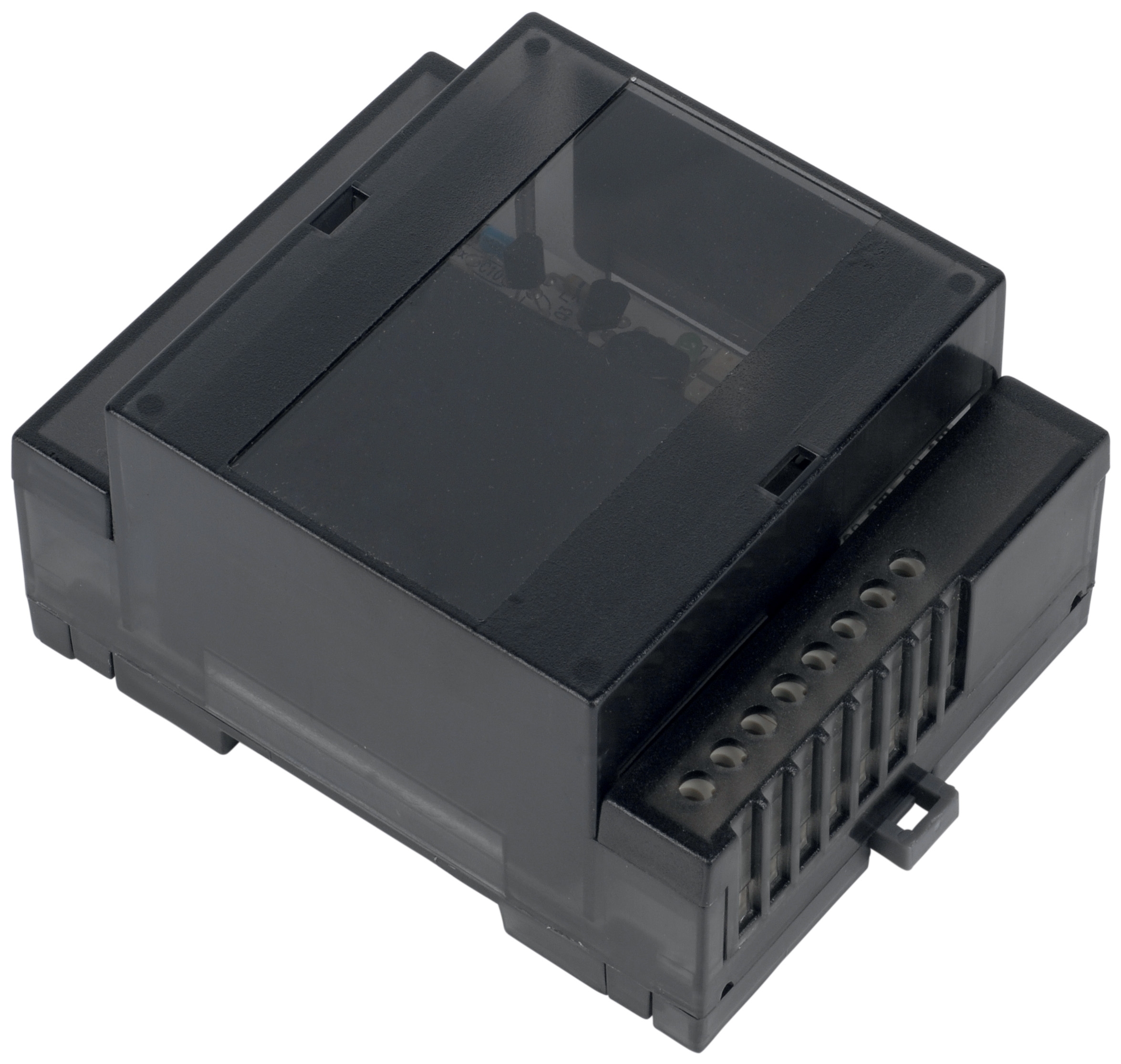
Table of Contentsexpand_more
Understanding Maintenance & Service Coordination in Modern Industrial Plants
Maintenance & Service effectiveness depends less on individual component quality and more on how well those components communicate diagnostically throughout their operational life. As a distributor with 35+ years of experience serving Singapore's industrial sector, 3G Electric has observed that plant managers who successfully reduce downtime typically coordinate pump maintenance with integrated control system monitoring rather than servicing equipment in isolation.
When you operate Interpump PUMP W2035 L ATEX (35 L/min at 200 bar, 13.23 kW) alongside Combutech Flame relay CF1 detection systems, you're managing two distinct diagnostic rhythms. The pump requires pressure monitoring and seal inspection cycles, while the flame relay needs sensor validation and electrical circuit verification. Coordinated Maintenance & Service planning means your technicians check both systems during the same site visit, using consistent data logging to identify patterns that predict failures weeks in advance.
For Singapore's humid tropical climate and continuous-duty operations, this coordination is not optional—it's essential to protecting your equipment investment and meeting regulatory compliance windows.
Comparing Pump Classes and Their Maintenance Intervals
The pump you select directly determines your Maintenance & Service frequency and cost profile. Consider three realistic scenarios:
Scenario 1: High-Flow, High-Pressure Applications
The Pratissoli KF30 delivers 106 L/min at 200 bar with 40 kW power—ideal for intensive circulation or spray cooling systems. At this capacity, your seal assemblies experience accelerated wear. Maintenance & Service intervals typically run 2,000–2,500 operating hours. In Singapore's 24/7 manufacturing environment, that translates to roughly quarterly inspections. Your maintenance cost: approximately SGD 1,200–1,800 per service cycle when including labor, seals, and bearing checks.
Scenario 2: Mid-Range, Continuous-Duty Operations
The Pratissoli SN7045 L (45 L/min at 210 bar, 18.4 kW) strikes a balance—sufficient flow for moderate spray or cooling loops without the extreme wear of the KF30. Maintenance & Service intervals extend to 3,000–3,500 hours, allowing semi-annual servicing in most Singapore plants. Per-cycle costs drop to SGD 900–1,300 because bearing loads remain moderate and seal degradation is slower.
Scenario 3: Specialized ATEX Compliance
The Interpump W2035 L ATEX (35 L/min, 200 bar, 13.23 kW) is engineered for hazardous zones. Maintenance & Service becomes regulatory—not optional. ATEX certification requires documented inspection every 1,500–2,000 operating hours, and certification paperwork must accompany every service record. Your Maintenance & Service cost is higher upfront (SGD 1,400–1,900 per cycle) because technicians must verify compliance seals and explosive-atmosphere rated components, but you avoid regulatory fines and operational permits being revoked.
Impact on Total Cost of Ownership (TCO): Choosing a lower-capacity pump to reduce Maintenance & Service frequency often backfires when it cannot deliver required flow, forcing equipment oversizing elsewhere or worse—causing process bottlenecks that generate emergency repairs. The KF30 and SN7045 L allow you to match application demand precisely, controlling Maintenance & Service costs through proper sizing rather than through heroic service intervals.
Integrating Flame Detection Systems into Your Maintenance & Service Schedule
In combustion-based processes (thermal oil heating, burner-driven operations), Combutech Flame relay CF1 systems must be validated alongside pump servicing. This is where many Singapore plant managers miss critical cost savings.
The CF1 flame relay supports up to 10 UV detectors per circuit. Each detector and relay contact requires functional testing every 1,000–1,500 operating hours. However, the CF1 operates independently of pump pressure cycles. If you service your pump every 2,500 hours but only test your flame detection every 3,000 hours, you create a seven-month window where a failing UV sensor could trigger false shutdowns—exactly when your pump is most critical.
Practical Maintenance & Service Approach:
- First Service Visit (Month 0): Full pump inspection + flame relay functional test. Baseline all pressure readings and relay response times. Cost: SGD 2,100–2,600.
- Second Visit (Month 4–6): Pump seal check only (intermediate service). Cost: SGD 700–900.
- Third Visit (Month 8–10): Full pump service + flame relay re-validation. Cost: SGD 2,200–2,700.
- Fourth Visit (Month 12): Pump bearing inspection + relay detector voltage sweep. Cost: SGD 1,100–1,500.
This 12-month rhythm ensures no component is unvalidated for more than 5 months. It also clusters high-cost Maintenance & Service events (full teardown) with flame system diagnostics, allowing one technician visit to address multiple systems—reducing mobilization costs by 30–40% versus staggered individual visits.
When you operate higher-capacity pumps like the Pratissoli KF30, the electrical demand on control relays increases, making CF1 validation even more critical. Coordinated Maintenance & Service prevents the scenario where a relay slowly degrades, eventually failing to shut down the pump in an emergency.
Gearbox Integration and Extended Equipment Lifecycle
Often overlooked, Interpump GEARBOX RS500 integration significantly extends your entire Maintenance & Service cycle if managed proactively. This gearbox (1:2.2 ratio, 18.5 kW max transmission) reduces motor speed from (typically) 1,450 rpm to approximately 660 rpm, which reduces vibration and seal stress by roughly 35%.
Plants that pair the Pratissoli SN7045 L with RS500 gearbox integration report:
- Seal life extension: From 2,500 hours to 3,800–4,200 hours (+60%)
- Bearing service intervals: From quarterly to semi-annual (+100%)
- Oil degradation rate: Slowed by ~20%, reducing fluid change frequency
- Noise/vibration complaints: Typically eliminated, improving operator compliance with maintenance routines
When planning Maintenance & Service budgets, account for gearbox oil sampling and viscosity checks (every 2,000 hours) in addition to pump maintenance. However, because the gearbox reduces overall system stress, your pump's pressure spike incidents and temperature runaway events drop by 40–50%, reducing unplanned emergency service calls.
Developing a Plant-Specific Maintenance & Service Calendar
Singapore's regulatory environment (WSH Act, technical safety standards) requires documented Maintenance & Service plans. 3G Electric recommends the following framework for typical plants operating pumps in the 35–106 L/min range:
Monthly (Operator Level)
- Visual inspection for leaks
- Pressure gauge reading log (compare to baseline)
- Sound/vibration assessment
- Oil clarity check (if applicable)
- Pressure relief valve functional test
- Seal condition assessment
- Bearing temperature monitoring
- Flame relay sensor circuit validation (if installed)
- Pump disassembly and seal replacement
- Bearing inspection and relubrication
- Motor electrical testing
- Gearbox oil sampling and top-up
- Control relay complete functional test
- Full documentation review
- ATEX certification verification (if applicable)
- Regulatory filing updates
- Spare parts inventory audit
- Monthly checks: 40–60 hours technician time/year (SGD 800–1,200)
- Quarterly services: 60 hours/year (SGD 1,800–2,400)
- Semi-annual overhauls: 120 hours/year + parts (SGD 8,000–12,000)
- Annual compliance: 20 hours/year (SGD 600–900)
- Total annual budget: SGD 11,200–16,500 per pump
This translates to approximately SGD 2.80–4.10 per operating hour—easily recovered through prevented emergency repairs (which typically cost 5–10× scheduled maintenance).
Maximizing Spare Parts Strategy Within Maintenance & Service Planning
Without coordinated Maintenance & Service discipline, spare parts inventory becomes chaotic. 3G Electric recommends stocking:
- High-turnover items (per pump): Seal kits (2 sets), gaskets (1 set), bearing spacers (1 set). Replace during every quarterly visit.
- Medium-stock items: Complete bearing assemblies (1 per 3 pumps), valve cartridges (1 per system), motor brushes (if applicable). Refresh annually.
- Low-rotation safety stock: Motor windings, pump casings, gearbox input shafts (1 per site, replace only on failure).
Coordinating Maintenance & Service means your supplier (like 3G Electric) becomes a predictable partner. Instead of emergency orders at 3x markup, you place quarterly orders aligned with your service schedule, reducing procurement cost by 20–30% while ensuring parts are always available.
Conclusion: From Reactive to Predictive Maintenance & Service
The leap from reactive Maintenance & Service (responding to failures) to predictive Maintenance & Service (preventing failures) requires one thing: systematic coordination across all equipment types. When you select Pratissoli KF30 or Pratissoli SN7045 L pumps, pair them with Combutech CF1 flame detection systems, and integrate Interpump RS500 gearboxes, you're building a diagnostically transparent system.
Singapore plant managers who succeed at this—using documented Maintenance & Service intervals, baseline pressure readings, and integrated control system validation—report 25–35% reduction in downtime, 15–20% lower energy consumption, and dramatic improvements in regulatory compliance audits.
With 35+ years in Singapore's industrial market, 3G Electric helps plant managers implement exactly this approach. We provide not just equipment, but Maintenance & Service guidance aligned with your operational reality.