Pressure Gauge Calibration and Accuracy Issues: A Diagnostic Guide for Singapore Industrial Applications
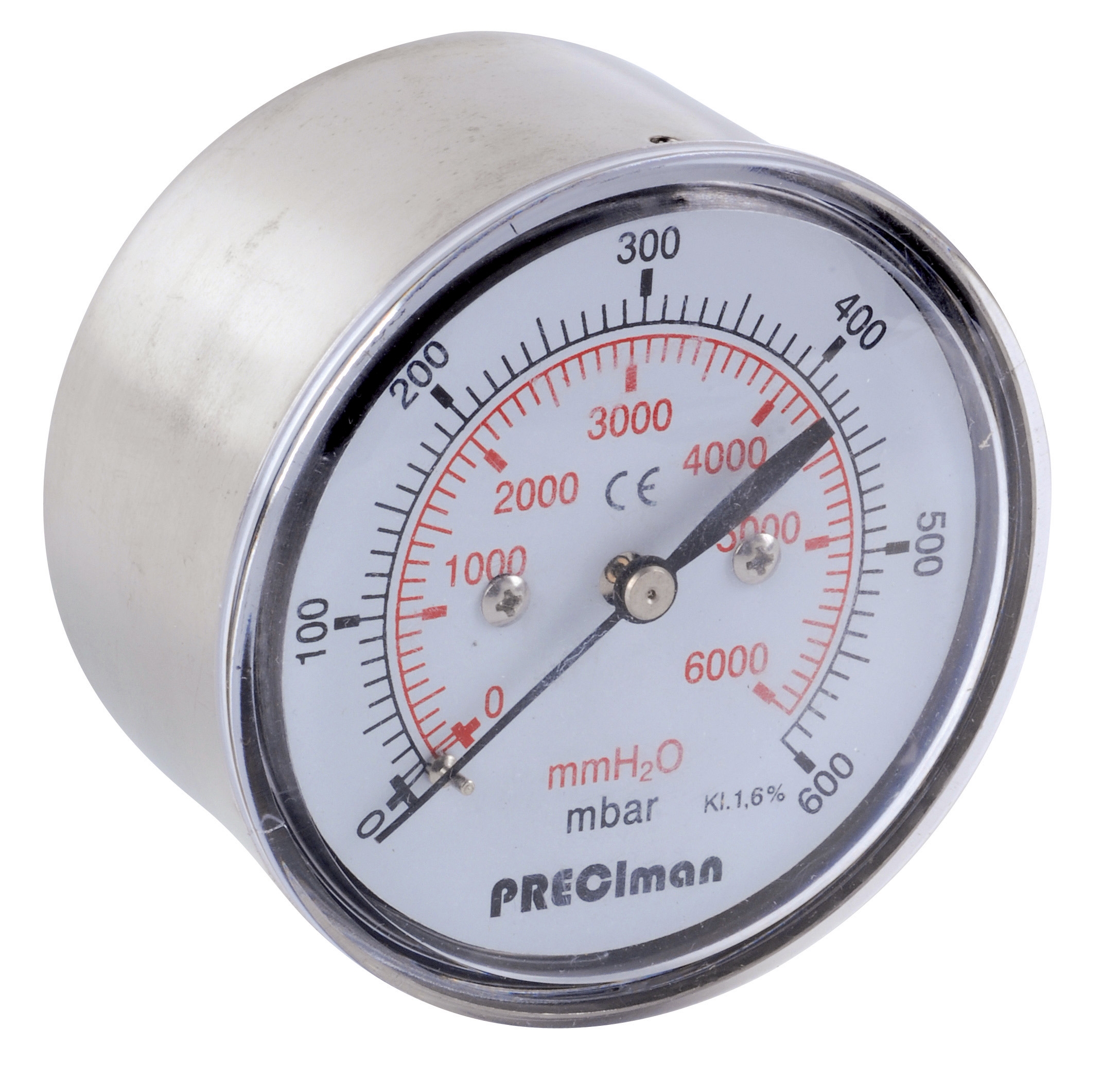
Table of Contentsexpand_more
Pressure Gauge Calibration and Accuracy Issues: A Diagnostic Guide for Singapore Industrial Applications
Pressure measurement instruments are critical control points in industrial facilities across Singapore. Yet calibration drift and accuracy degradation remain among the most overlooked maintenance issues. Unlike catastrophic failures that demand immediate attention, subtle measurement errors accumulate silently—leading to process inefficiencies, product quality variations, and regulatory compliance gaps. This guide provides industrial professionals with systematic diagnostic procedures to identify calibration problems, understand their root causes, and implement targeted corrective measures. Whether you're managing pneumatic systems, compressed gas installations, or hazardous area applications, understanding pressure gauge performance degradation is essential for maintaining process integrity and operational safety.
Understanding Calibration Drift and Measurement Accuracy
Calibration drift occurs when a pressure gauge's indicated reading deviates progressively from its true value. Unlike a sudden failure, drift manifests as gradual accuracy loss—often undetected until compliance audits or process problems force investigation. Industrial pressure gauges rely on mechanical principles: a sensing element (typically a Bourdon tube or capsule) responds to pressure changes and transmits mechanical displacement to a pointer mechanism. Over time, multiple factors degrade this transduction pathway.
The CBM capsule gauge series (used in low-pressure pneumatic applications) achieves accuracy ratings of ±1.6% of full-scale range under ideal conditions. However, real-world installations experience environmental stressors that progressively degrade this accuracy. Temperature fluctuations cause elastomer seals and metallic components to expand and contract unevenly. Vibration induces mechanical wear in pivot points and pointer bearings. Corrosive media attacks unsealed components, generating friction that dampens gauge response. Pressure surges overstress the Bourdon tube, permanently deforming its mechanical properties.
In Singapore's tropical climate—with high humidity, temperature variability (24-34°C annually), and salt-laden coastal environments—these degradation mechanisms accelerate. Facilities located within 5km of coastal areas experience accelerated corrosion from marine aerosols. Temperature swings between air-conditioned spaces and external equipment areas create condensation inside gauge bodies, promoting internal corrosion and seal degradation.
Measurement accuracy comprises several components: repeatability (consistency of successive readings), linearity (accuracy across the measurement range), and hysteresis (difference between ascending and descending pressure readings). A gauge may read accurately at specific test points while exhibiting poor linearity across its operating range—a condition that standard calibration procedures can miss if they test only at zero and full-scale points.
Diagnostic Procedures and Product-Specific Considerations
Systematic diagnosis begins with establishing your gauge's baseline performance. Obtain the original calibration certificate documenting reference conditions: temperature, pressure sequence, and acceptance criteria. Most industrial gauges were calibrated at 23±2°C; Singapore installations typically operate 5-10°C above this baseline. Temperature coefficient specifications—typically 0.05% per °C for quality instruments—directly impact measurement accuracy. A gauge calibrated at 23°C will exhibit +0.5-1.0% additional uncertainty when operated at 28-33°C without correction factors.
For glycerin-filled manometers like the CBM ROS58040 (0/+250bar range, stainless steel), the diagnostic approach differs from dry gauges. Glycerin serves dual functions: damping pointer oscillation and protecting internal components from corrosion. Degraded glycerin—evidenced by discoloration, sludge formation, or separation from the Bourdon tube—indicates advanced degradation. This occurs in facilities with elevated ambient temperatures or direct sunlight exposure. Glycerin viscosity changes with temperature; a gauge exhibiting lag in response time during morning startup but normal response by mid-afternoon suggests glycerin viscosity issues related to thermal lag.
The stainless steel axial manometer (, 0/+400Mbar range) represents an upgrade path for corrosive environments. Compared to standard steel cases, stainless construction resists salt fog and industrial atmospheres for 3-5x longer periods. However, stainless steel's lower thermal conductivity means internal temperature lags behind ambient by 2-4°C, affecting reading stability during rapid temperature changes.
Diagnostic procedure: Conduct side-by-side comparison testing using a calibrated reference instrument (typically a hydraulic dead-weight tester or digital pressure meter with ±0.5% accuracy). Apply pressure at 10%, 25%, 50%, 75%, and 100% of gauge range. Record deviations at each point. Perform this test under three temperature conditions: morning cool-down (24°C), midday peak (32°C), and air-conditioned space (20°C). Systematic deviation patterns reveal root causes. Temperature-correlated drift suggests thermal coefficient degradation. Non-linear errors (larger errors at mid-range) indicate Bourdon tube mechanical fatigue. Hysteresis exceeding 2% of full-scale range indicates seal wear or internal friction issues.
Real-World Application Scenarios in Singapore Industrial Facilities
Consider a beverage production facility in Singapore's jurong industrial estate managing five parallel filling lines. Each line monitors compressed air pressure using standard glycerin-filled gauges. After two years of operation, quality control noticed filling inconsistencies: some bottles underfilled, others overfilled. Investigation revealed the pressure gauges were reading 0.3-0.8bar higher than actual system pressure. This 10-15% overestimate, remaining within the ±1.6% calibration accuracy rating, had accumulated through minor daily deviations. Root cause: inadequate maintenance of air-line filters caused particulate contamination inside the gauge bodies, increasing internal friction and stalling the pointer at higher positions during slow pressure changes.
A second scenario involves a semiconductor cleanroom facility using nitrogen gas at 3.5bar. The facility replaced worn nitrogen gauges with new CBM stainless steel instruments. However, calibration drift appeared within six months—readings drifted 0.2-0.3bar low. Investigation revealed the facility's planned quarterly recalibration schedule, suitable for standard facilities, was inadequate for the cleanroom's weekly pressure adjustment cycles. Frequent adjustment cycles accelerated mechanical wear. The facility upgraded to semi-annual recalibration combined with weekly visual checks (pointer position against previous shift records) and monthly temperature-corrected verification readings using a portable digital pressure meter.
A third example: a petrochemical facility managing diesel fuel transfer systems required ATEX-certified measurement equipment. The facility initially used the CBM Atex diesel probe for gas detection but neglected corresponding pressure measurement for fuel line monitoring. When pressure surge damaged unmonitored lines, upgrading to stainless steel gauges with documented ATEX compatibility prevented recurrence. The gauge's ±1.6% accuracy proved adequate for process control; the stainless construction provided 8+ years of service in the corrosive fuel environment.
Selection Criteria and Maintenance Best Practices
Select gauges based on four primary criteria: measurement range (choose a range where your typical operating pressure falls between 40-70% of maximum—this provides optimal accuracy), accuracy class (±1.6% for CBM capsule gauges suits most industrial applications; laboratory work requires ±0.5%), environmental protection (glycerin fill for corrosive/vibration environments; stainless steel cases for marine/coastal areas), and connection compatibility (verify G1/4 or G1/2 threads match your system).
Implement preventive maintenance: establish a recalibration schedule based on your facility's pressure adjustment frequency and environmental conditions. Standard facilities: annual recalibration. High-frequency adjustment environments: semi-annual. Coastal areas or high-vibration zones: semi-annual minimum. Document all readings with timestamps and ambient temperature. Establish action limits at ±1.0% deviation (half the gauge tolerance)—when readings drift to this threshold, schedule recalibration rather than waiting until out-of-tolerance conditions occur.
Protect gauges from environmental stress: install snubbers (flow restrictors) upstream of gauges in high-vibration or pulsating pressure applications. Shield gauges from direct sunlight in outdoor installations. Maintain ambient temperatures within ±5°C of the 23°C calibration reference. Drain condensation from gauge connections monthly in humid climates. These practices extend calibration intervals and improve measurement reliability.
Integrated Measurement and Detection Systems
For facilities combining pressure measurement with gas detection—particularly critical in hazardous areas—integrate your diagnostic approach. The CBM Detection unit 4 probes and gas detection center Din rail provide central monitoring of multi-zone facilities. These systems require corresponding pressure measurement at each detection point. Coordinate your pressure gauge recalibration schedule with detection system testing to ensure aligned measurement confidence. A facility with drifting pressure gauges cannot reliably correlate pressure changes with detection signals, complicating root-cause analysis during incidents.
Pressure measurement also verifies detection system functionality: stable pressure readings during system operation confirm proper sensor purge flows and absence of blockages. Unexpected pressure fluctuations can indicate gas detector malfunction or sensor contamination before safety functions fail.
Conclusion and Next Steps
Pressure gauge calibration drift represents a silent but manageable risk in industrial operations. By implementing systematic diagnostic procedures, establishing appropriate maintenance schedules, and selecting instruments matched to your facility's environmental conditions, you can maintain measurement accuracy and process control for extended service periods. Singapore's industrial environment—with thermal and humidity variability—demands more aggressive maintenance than temperate regions; semi-annual verification represents a practical minimum for most facilities.
Begin by auditing your current gauge population: identify installation dates, service history, and last calibration records. Cross-reference against your facility's environmental conditions and pressure adjustment frequency. Upgrade instruments showing age-related degradation with quality alternatives like the CBM stainless steel manometer series, which offer extended service life in challenging environments. Establish documented maintenance procedures, train your technical team on verification methods, and integrate pressure measurement data into your facility's broader process control and safety management systems.
3G Electric provides calibrated CBM measurement and detection instruments, technical documentation, and installation support for Singapore industrial facilities. Contact our technical team to discuss your pressure measurement challenges, explore suitable instrument upgrades, and establish maintenance procedures aligned with your operational requirements. We've served Singapore industry since 1990 and maintain extensive technical resources for measurement and detection system optimization.
![Airstat Buyer's Guide SG | TAT Broth Media [2026]](https://oxalncjenpflyqfncuhe.supabase.co/storage/v1/object/public/product-assets/grainger/62314438-78dc-4409-9813-a921ea1b50c8.jpg)